Difference Between Speech Therapy and Occupational Therapy
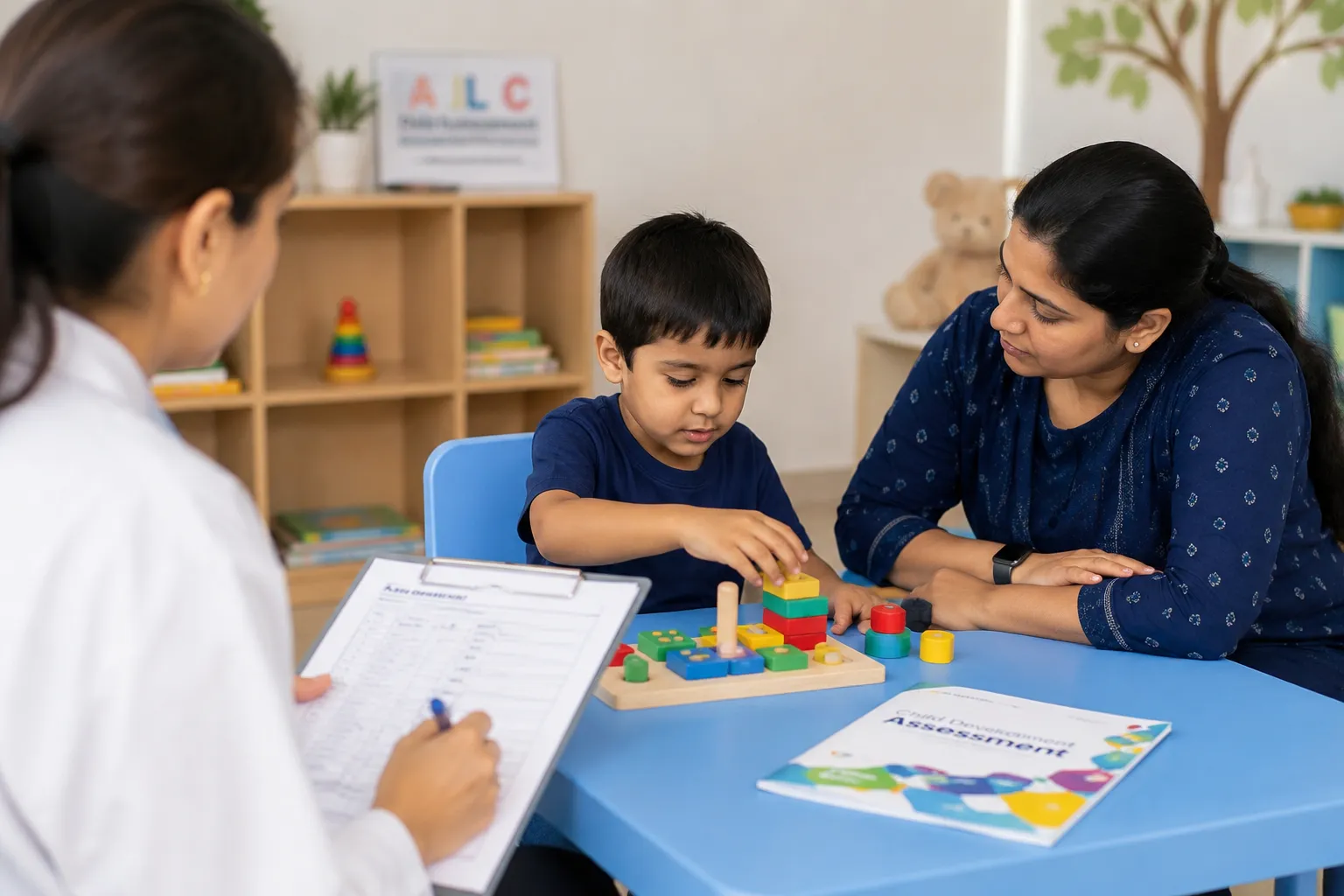
If you're a parent walking out of your child's developmental assessment, chances are you've heard both these words thrown at you in the same breath: "We recommend speech therapy," and then, almost as an afterthought, "and maybe some occupational therapy too."
And if you're like most parents I've spoken with over the years, your first reaction is probably a polite nod followed by a very confused Google search later that night.
I get it. Both therapies sound like they belong to the same broad "helping kids develop" bucket. Both involve a therapist, a session room, some toys, a lot of patience, and weekly appointments that somehow always land on the one day you had other plans. But here's the thing — speech therapy and occupational therapy are not interchangeable, and mixing them up (or assuming your child only needs one when they actually need both) can genuinely slow down progress.
So let's break this down properly. No jargon-soup, no textbook definitions copy-pasted from a pamphlet. Just a real, practical explanation of what each therapy actually does, how they're different, and — just as importantly — how they often work together.
Let's Start With the Basics: What Does Each Therapy Actually Do?
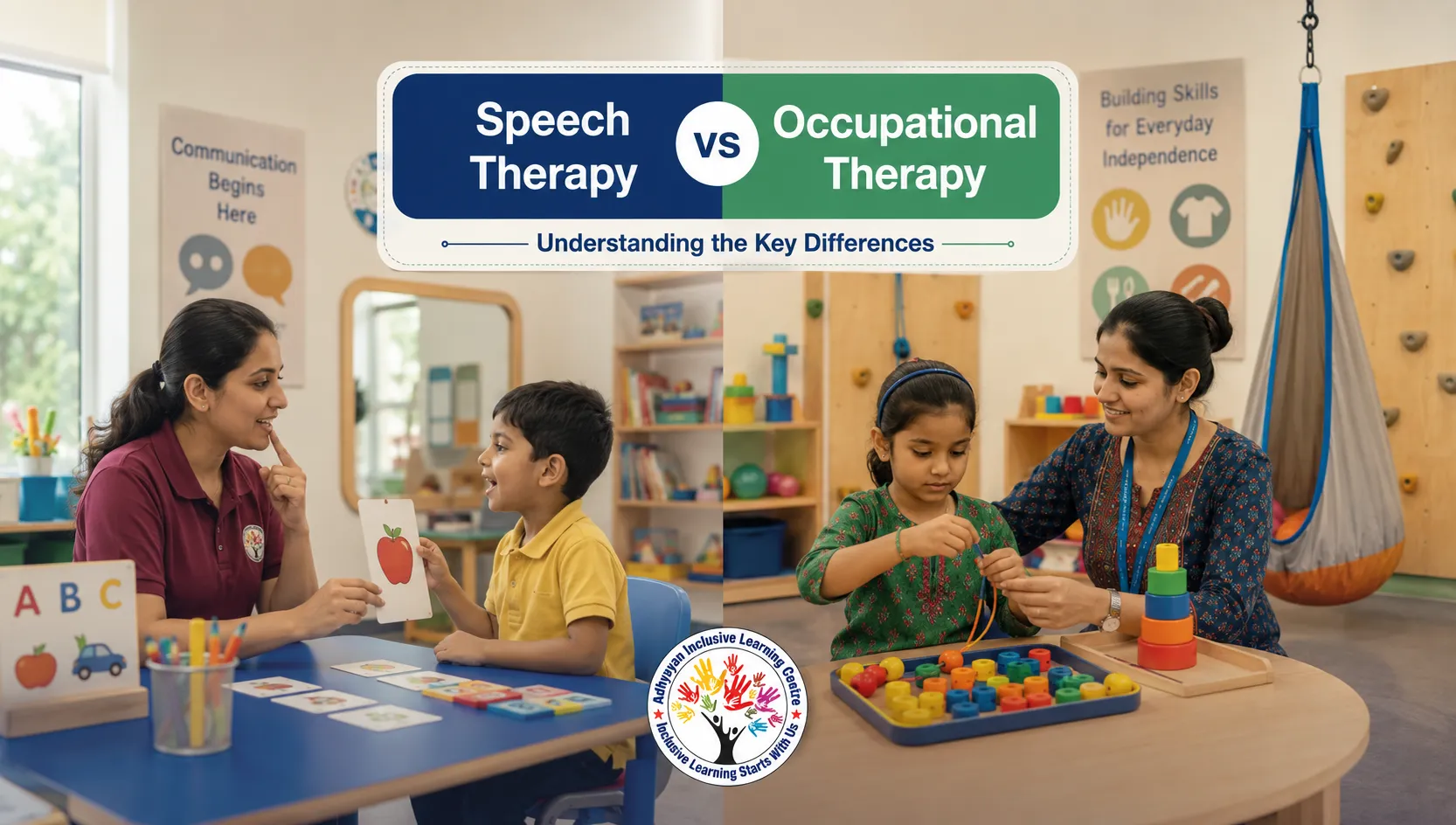
Speech therapy is about communication. Full stop. It's concerned with how a person speaks, understands language, forms sentences, and expresses what's going on inside their head. If your child struggles to pronounce certain sounds, has a smaller vocabulary than expected for their age, stammers, or finds it hard to follow instructions or hold a conversation — that's speech therapy territory.
It's not just about "talking clearly" either. Speech-language therapists also work on comprehension (understanding what others are saying), social communication (knowing when to speak, how to take turns in conversation, reading tone and context), and in some cases, alternative ways of communicating altogether — like sign language or communication devices — for children who may never develop typical verbal speech.
Occupational therapy, on the other hand, is about function. It looks at how a child (or adult) manages the physical and sensory demands of everyday life — holding a pencil, buttoning a shirt, sitting still at a desk, tolerating loud noises without a meltdown, catching a ball, or simply organizing their body well enough to get through a school day without falling apart by 11 am.
Occupational therapists work on fine motor skills, gross motor coordination, sensory processing, self-care routines, and the underlying physical and neurological foundations that make "normal daily life" possible. Think of OT as the therapy that helps a child do things, while speech therapy is the one that helps a child say and understand things.
The Simplest Way I Explain It to Parents
I usually tell parents to picture two different rooms in the same house.
One room is all about words — sounds, sentences, vocabulary, conversations, understanding stories, following instructions. That's speech therapy's room.
The other room is about the body — muscles, coordination, senses, routines, independence in daily tasks. That's occupational therapy's room.
Sometimes a child only needs work done in one room. Sometimes both rooms need attention because, honestly, a lot of developmental conditions — autism, ADHD, developmental delays, cerebral palsy, Down syndrome — affect more than one area at once. That's exactly why most credible therapy centres don't treat these as separate, siloed departments. They're meant to talk to each other.
Where People Usually Get Confused
Here's where I see the mix-up happen most often.
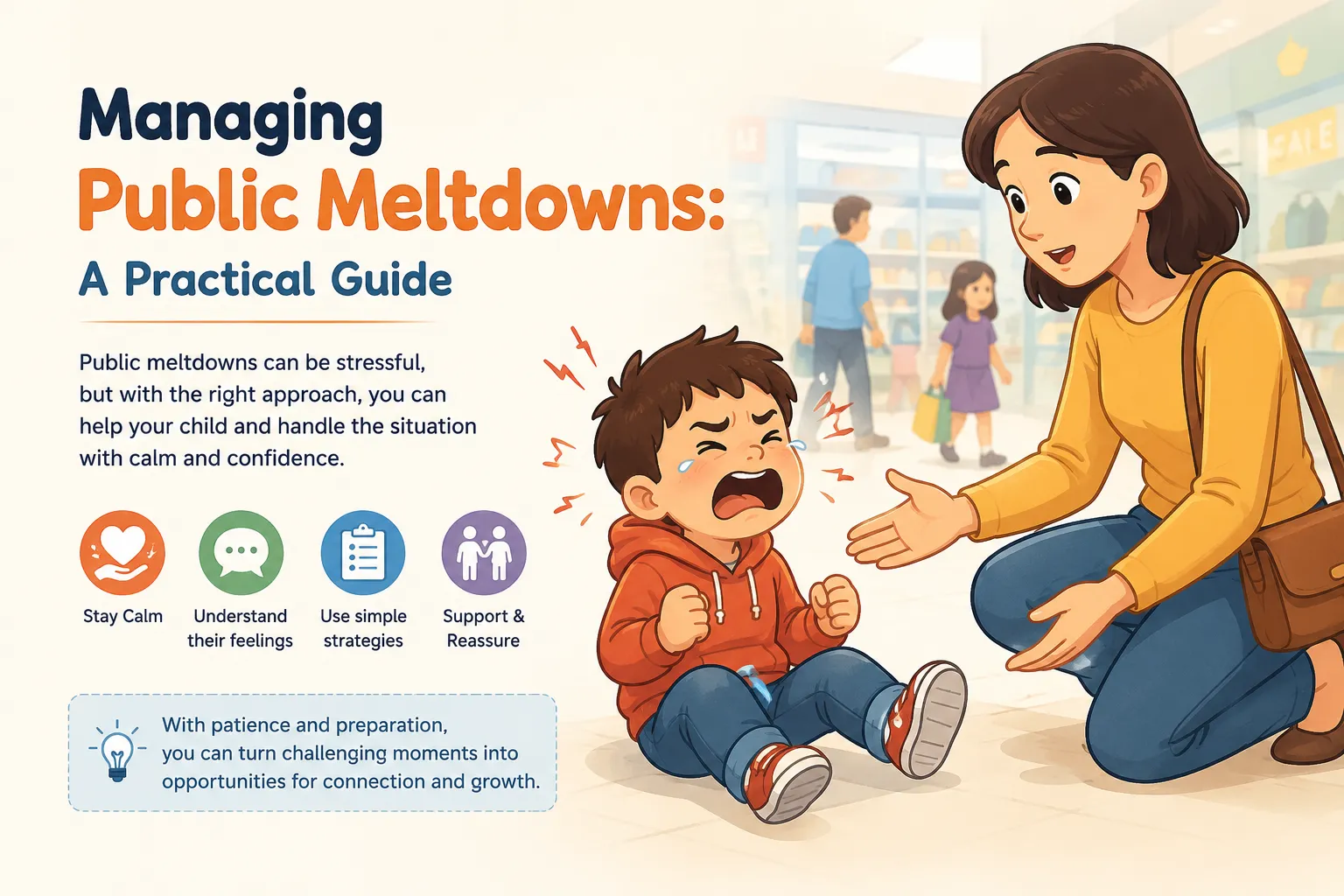
A child who has trouble expressing themselves might also get frustrated easily, throw tantrums, or avoid social situations. Parents sometimes assume this is purely a "behaviour problem" and look only toward occupational therapy or counselling. In reality, a large chunk of that frustration might be rooted in a communication gap — the child wants to say something and simply can't, so the frustration comes out physically instead. That's a speech therapy issue wearing a behaviour costume.
On the flip side, a child who seems to "understand everything but just won't sit still," struggles with handwriting, or is unusually sensitive to textures and sounds is often steered straight into speech therapy because the parents assume any developmental concern equals a language concern. But this is very much an occupational therapy profile — sensory processing and motor planning, not vocabulary or articulation.
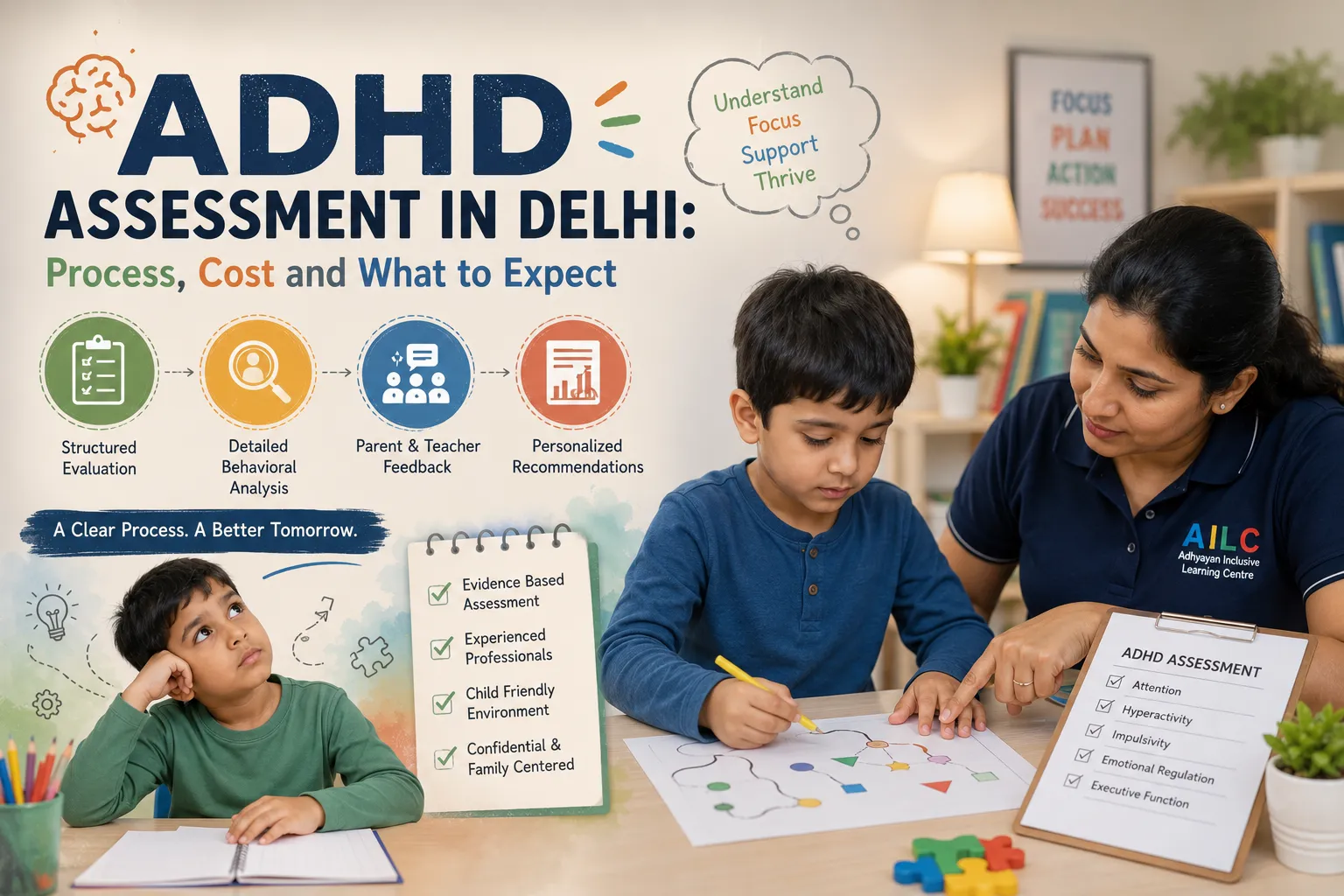
This is why a proper assessment matters so much before jumping into any one therapy. A good developmental evaluation should be able to tell you which "room" — or whether both rooms — need work.
Do Children Often Need Both?
Honestly, yes — more often than not, especially in conditions like autism spectrum disorder, ADHD, global developmental delay, and certain genetic conditions like Down syndrome. It's incredibly common for a child to have both a communication delay and a sensory-motor challenge sitting side by side. That's the nature of how development works; skills rarely grow in perfectly separate lanes.
This is also why multidisciplinary centres exist — places where speech therapists, occupational therapists, special educators, and behaviour specialists sit under one roof and actually coordinate a child's plan together, instead of sending parents running between five different clinics across the city with five different opinions. Centres like Adhyayan Inclusive Learning Centre, for instance, offer occupational therapy alongside speech therapy, special education, and behaviour modification, precisely because real progress tends to happen when these disciplines talk to each other instead of working in isolation.
What a Typical Session Actually Looks Like
In speech therapy, a session might involve picture cards, storytelling, articulation drills for specific sounds, breathing and oral-motor exercises, structured conversation practice, or — for non-verbal children — working with communication boards or devices. Parents are usually given specific "homework" too: simple language-rich activities to do at home, because consistency outside the clinic matters just as much as the session itself.
In occupational therapy, a session might look more like play, and that's intentional. Swinging, climbing, squeezing therapy putty, threading beads, balancing on a wobble board, practising buttoning a shirt or tying shoelaces — these are all deliberately chosen activities that build strength, coordination, and sensory regulation, even though to a child it just feels like fun.
Neither therapy looks like a classroom lecture, and that's by design. Kids don't learn well through lecturing; they learn through repetition dressed up as play.
So Which One Does My Child Need?
Honestly, this isn't something you should try to diagnose from a blog post (mine or anyone else's). If your child has speech delays, unclear pronunciation, or trouble understanding and expressing themselves, a speech-language evaluation is the right first step. If your child struggles with coordination, handwriting, sensory sensitivities, or daily self-care tasks, an occupational therapy assessment makes more sense. And if there's overlap — which, again, is very common — a combined evaluation will usually flag that early.
What matters most is not waiting too long to ask the question. Early intervention, in both these fields, consistently shows better outcomes than starting late. A three-year-old with a speech delay who starts therapy immediately has a very different trajectory than one who starts at seven, after the gap has had years to widen.
Conclusion
Speech therapy and occupational therapy aren't competing services or two names for the same thing — they're two different lenses looking at a child's development. One listens to how a child communicates. The other watches how a child moves, senses, and manages daily life. Most of the time, especially with children who have developmental differences, both lenses are needed to get the full picture.
If you're unsure which your child needs, don't guess — get a proper assessment. A good therapist won't just hand you a therapy plan; they'll explain why that particular therapy makes sense for your child's specific challenges. That clarity alone is often the biggest relief for a worried parent.