Vocational Training in Delhi for Children with Special Needs

Overview

What Is Vocational Training?

Vocational training helps children and young adults with special needs develop practical, social, and work-related skills needed for greater independence and everyday life. Unlike traditional classroom learning, it focuses on hands-on experiences that build confidence, improve daily living abilities, and prepare individuals for future vocational opportunities.

At AILC, we provide personalised vocational training in Delhi for children and young adults with autism spectrum disorder (ASD), intellectual disabilities, developmental delays, Down syndrome, ADHD, and learning disabilities. Our programmes are tailored to each learner's strengths, interests, and developmental goals to ensure meaningful progress.

As a trusted vocational training centre, we combine vocational education with practical skill development through structured activities that promote communication, self-care, social interaction, workplace behaviour, time management, and responsibility. By learning these essential life and vocational skills, students become more confident, self-reliant, and better prepared for greater independence at home, in the community, and in future work environments.


5 stars
Google Ratings
30+
Years Experience
25,638+
Students Supported

Book an Appointment Now

100% privacy of your information

'
Who We Help

Who Can Benefit from Vocational Training?

Vocational training is beneficial for children, teenagers, and young adults with special needs who require support in developing practical life, social, and work-readiness skills. At AILC, our programmes are designed to meet the individual abilities and goals of each learner, helping them become more confident and independent.

Who Can Benefit?

  • Autism Spectrum Disorder (ASD): Builds communication, social interaction, daily living, and workplace readiness skills through structured activities.
  • Intellectual Disabilities: Encourages independence by developing practical, self-care, and functional life skills.
  • Down Syndrome: Strengthens communication, routine management, and vocational abilities to support everyday living.
  • Learning Disabilities: Improves organisation, problem-solving, task completion, and functional skills for greater confidence.
  • ADHD: Enhances attention, time management, responsibility, and structured work habits.
  • Developmental Delays: Supports the gradual development of essential life and vocational skills at an individual pace.
  • Young Adults Transitioning into Adulthood: Prepares learners for increased independence, community participation, and future employment opportunities.

Whether you are looking for vocational training for autism, vocational training for special needs, or vocational training for disabled persons, our personalised approach helps every learner build practical skills that support a more independent and fulfilling future.
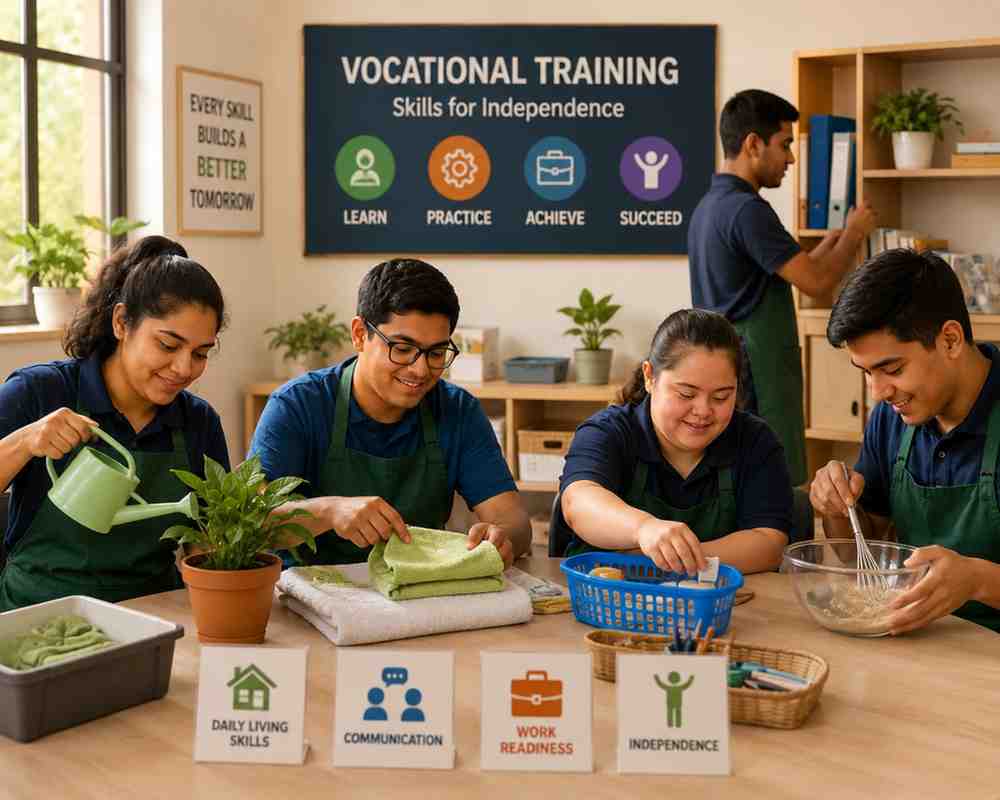
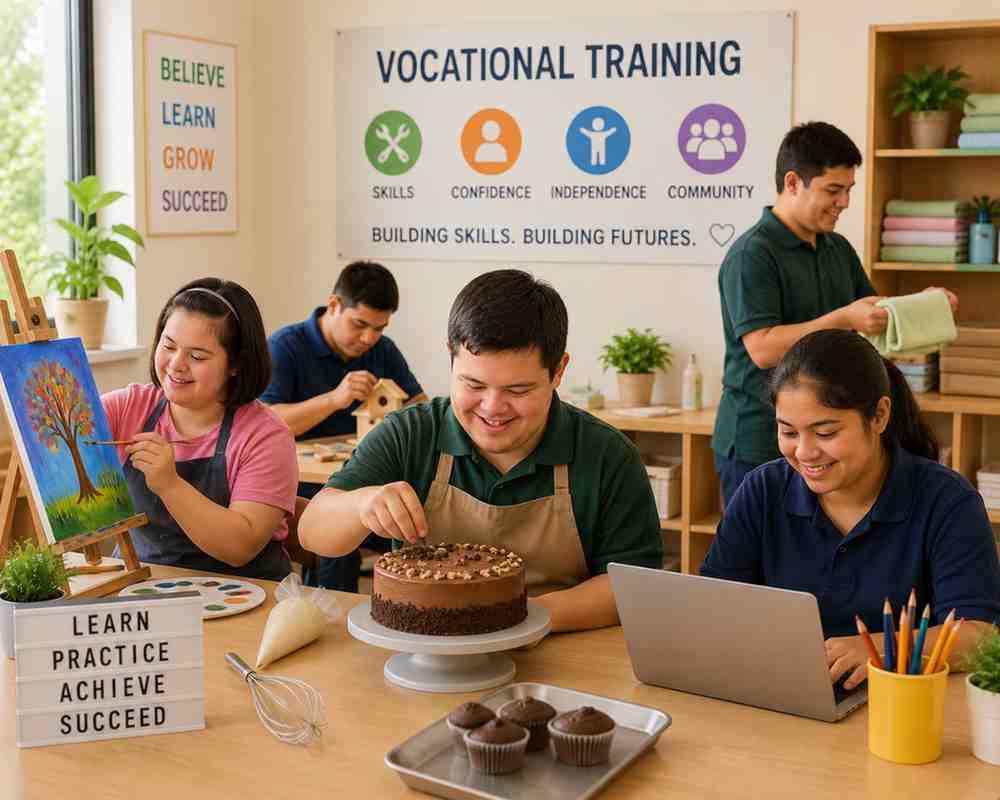
Vocational Training for Special Needs
Our Programs

Our Vocational Training Programs

At AILC, our vocational training programs are designed to help children and young adults with special needs develop practical, creative, and workplace-ready skills. Each programme is personalised according to the learner's interests, abilities, and future goals, providing hands-on learning in a supportive environment.

Our goal is to equip every learner with practical vocational skills that promote confidence, independence, and readiness for daily life, higher learning, or future employment opportunities.

Baking

Learn basic baking techniques, kitchen safety, food preparation, and teamwork while developing confidence and practical vocational skills.

Computer Applications

Develop essential computer skills including typing, document creation, internet usage, and basic digital literacy for everyday learning and future employment.

Creative & Life Skills

Our programmes include Digital Art, Arts & Crafts, Culinary Skills, Social Skills Training, Communication Skills, and beginner-friendly Web Development to build creativity, confidence, independence, and workplace readiness.

Benefits

Benefits of Vocational Training

Vocational training helps children and young adults with special needs develop practical skills that support greater independence and long-term success. Through personalised learning and real-world experiences, learners gain the confidence to participate more actively at home, in school, and within their communities.

Key Benefits

  • Improved independence in daily activities
  • Increased confidence and self-esteem
  • Better communication and social interaction skills
  • Development of practical daily living skills
  • Stronger work habits and employment readiness
  • Better routine management and responsibility
  • Enhanced quality of life and community participation
Benefits of Vocational Training
Get In Touch

Call Now to Book Consultation

Take the first step toward your child's brighter future. Our specialists are ready to guide you with a personalized plan built around your child's unique needs.

+91 98100 52388
Our Process

Our Vocational Training Approach

At AILC, every learner follows a structured and personalised vocational training journey designed to build practical skills, confidence, and independence at their own pace. Our approach focuses on identifying each learner's strengths, nurturing their abilities, and providing consistent support through every stage of development.

By combining personalised instruction with hands-on learning experiences, we help learners gain practical, social, and vocational skills needed for greater independence, community participation, and future success.

Our Training Process

1

Assessment

We begin with a comprehensive assessment to understand the learner's strengths, interests, challenges, and current skill level.

2

Goal Setting

Based on the assessment, we set realistic and achievable goals in collaboration with parents, caregivers, and educators.

3

Individual Training Plan

A customised vocational training plan is developed to match the learner's unique abilities, learning style, and long-term aspirations.

4

Skill Development

Through hands-on activities and guided practice, learners develop communication, social, daily living, and work-related skills in a supportive environment.

5

Community Practice

Students are encouraged to apply their skills in real-life and community settings, helping them become more confident and independent.

6

Review & Progress Monitoring

Regular progress reviews ensure that training remains effective and goals are updated as learners continue to grow.

7

Transition Planning

We support learners in preparing for greater independence, higher vocational opportunities, and, where appropriate, future employment.

Importance

Why Early Vocational Preparation Matters

Introducing vocational training during adolescence allows learners to gradually develop practical, social, and work-related skills before adulthood. Early preparation provides more time to build confidence, explore individual interests, and strengthen independence through consistent practice. By starting early, young people with special needs are better prepared for future education, vocational opportunities, and a more independent adult life.

Why Choose Us

Why Choose AILC for Vocational Training in Delhi?

At AILC, we believe vocational training should empower every learner to become more confident, independent, and prepared for everyday life. Our personalised programmes combine practical skill development with continuous guidance in a safe and supportive environment, helping children and young adults with special needs achieve meaningful progress at their own pace.

01
Experienced Special Educators

Experienced Special Educators

Our qualified professionals understand the unique learning needs of children and young adults with special needs and provide personalised guidance throughout the training journey.

02
Individualised Training Plans

Individualised Training Plans

Every learner receives a customized vocational training programme based on their strengths, interests, abilities, and long-term goals.

03
Hands-On Learning

Hands-On Learning

Practical activities and real-world experiences help learners develop vocational, communication, and daily living skills with confidence.

04
Focus on Independence

Focus on Independence

We encourage learners to become more self-reliant by developing essential life skills, decision-making abilities, and personal responsibility.

05
Workplace Readiness

Workplace Readiness

Our programmes build workplace habits such as teamwork, time management, task completion, communication, and problem-solving.

06
Parent Collaboration

Parent Collaboration

We maintain regular communication with parents and caregivers, providing progress updates and guidance to support learning at home.

07
Safe & Inclusive Environment

Safe & Inclusive Environment

Learners grow in a structured, encouraging, and inclusive setting where they feel respected, motivated, and confident to explore new skills.

08
Holistic Development

Holistic Development

Beyond vocational skills, we focus on social interaction, emotional development, confidence building, and overall personal growth to prepare learners for a more independent future.

FAQ

Frequently Asked Questions

Vocational training is a structured programme that teaches practical, social, and work-related skills to help individuals become more independent. It focuses on real-life abilities such as communication, daily living skills, workplace behaviour, and task completion rather than traditional academics.
Vocational training is beneficial for children, teenagers, and young adults with autism, intellectual disabilities, Down syndrome, ADHD, developmental delays, learning disabilities, and other special needs. Programmes are personalised to match each learner's abilities and goals.
Vocational training can begin during adolescence, typically from 13 years onwards, depending on the learner's readiness and developmental needs. Starting early allows students to gradually build practical and work-readiness skills before transitioning into adulthood.