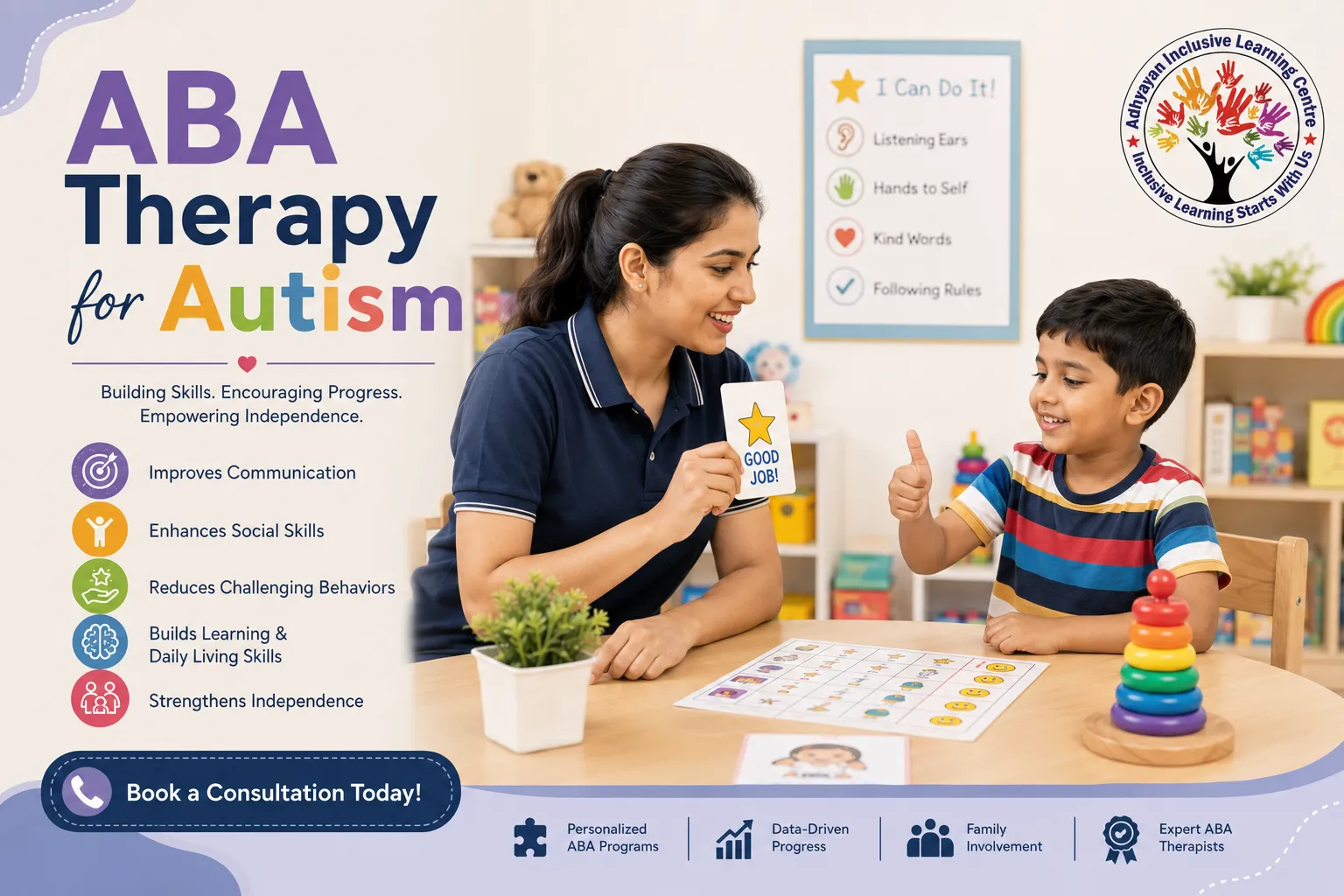
If you've just started researching autism treatment options, you've probably run into the term "ABA" more than any other. It comes up in diagnosis meetings, parent forums, pediatrician referrals, and school recommendations. But very few people actually explain what it looks like day-to-day, or why it's often called the "gold standard" for autism intervention.
This guide breaks down ABA therapy for autism in plain language: what it actually involves, how a real session runs, what results parents can realistically expect, and how to tell if a program is genuinely well-run or just well-marketed.
What Is ABA Therapy?
ABA stands for Applied Behavior Analysis. Strip away the clinical name, and it's a structured way of understanding why a behavior happens, then using that understanding to teach new skills or reduce behaviors that get in a child's way. This includes meltdowns, self-injury, difficulty following instructions, or an inability to communicate needs.
At its core, ABA works on a simple, well-researched principle. Behavior that gets reinforced tends to repeat, and behavior that doesn't get reinforced tends to fade. A therapist identifies a specific skill or behavior goal, say, responding to their name, or requesting a toy instead of grabbing it, and builds a structured plan to teach and reward that behavior consistently, in small, measurable steps.
It sounds mechanical written out like this, but in practice, good ABA rarely feels robotic to a child. It shows up as play, games, routines, and everyday interactions, engineered carefully behind the scenes to build specific skills.
Why ABA Is Considered the Gold Standard
A fair question parents ask: with so many autism therapies available, why does ABA get singled out?
The honest answer is evidence. ABA has been studied for decades, longer and more rigorously than almost any other autism intervention, and the research consistently points to meaningful gains in communication, social behavior, and independence, particularly when therapy is intensive and starts early. Some long-term studies have found that children who received sustained, early ABA therapy went on to need significantly less specialized support later in childhood.
That said, "gold standard" doesn't mean "one-size-fits-all," and it doesn't mean every child needs the exact same intensity or approach. ABA is flexible by design. It can be adapted for a non-verbal toddler, a chatty eight-year-old struggling with friendships, or a teenager working on independent living skills.
What ABA Therapy Actually Targets
Parents are often surprised by how broad ABA's scope is. It's not just about "fixing" difficult behavior. It's about building an entire toolkit for daily life.
Common goal areas include:
- Communication: requesting needs, responding to questions, using words, gestures, or AAC devices
- Social skills: making eye contact, sharing, taking turns, understanding others' emotions, building friendships
- Daily living skills: dressing, toileting, brushing teeth, eating independently, following morning or bedtime routines
- Attention and learning readiness: sitting for an activity, following multi-step instructions, transitioning between tasks
- Emotional regulation: recognizing frustration or overstimulation and using calming strategies instead of a meltdown
- Reducing challenging behavior: aggression, self-injury, elopement (running off), or repetitive behaviors that interfere with learning
A well-designed ABA program rarely tackles all of these at once. It prioritizes based on what will most improve a specific child's quality of life right now, a concept behavior analysts call "socially significant" behavior change.
How an ABA Session Actually Works
Here's what most parents want to know but rarely get told upfront: what does an actual session look like?
1. Assessment first. Before any therapy begins, a Board Certified Behavior Analyst (BCBA) conducts a detailed evaluation. This involves observing the child, interviewing parents, and identifying strengths, challenge areas, and the specific function behind difficult behaviors (is a tantrum about escaping a task, seeking attention, or sensory overload? The "why" changes the plan completely).
2. A written, individualized plan. Based on the assessment, the BCBA writes specific, measurable goals, not vague aims like "improve behavior," but concrete targets like "child will request a preferred item using two words, in 8 out of 10 opportunities, across three settings."
3. One-on-one teaching sessions. A trained therapist (often called an RBT, or Registered Behavior Technician) works directly with the child, usually through play-based activities, structured teaching trials, and naturalistic interactions throughout the day.
4. Positive reinforcement, not punishment. Modern ABA leans heavily on rewarding desired behavior through praise, preferred toys, activities, or tokens, rather than punishing unwanted behavior. This is one of the biggest misconceptions parents have about ABA. Older, outdated models used more punitive techniques, but current best-practice ABA is reinforcement-based and child-led wherever possible.
5. Data collection, every session. This is what actually separates ABA from many other therapies. Therapists track data on every target behavior, every session. That data drives decisions, so if a goal isn't progressing, the plan changes. Nothing runs on guesswork for long.
6. Regular plan reviews. BCBAs typically review progress every few weeks, adjusting goals as the child masters skills or as priorities shift.
7. Parent training. ABA works best when it doesn't stay locked inside a therapy room. Parents are taught the same reinforcement strategies used in sessions, so skills carry over into mealtimes, bath time, and outings, where they matter most.
How Intensive Does ABA Need to Be?
This is one of the most common, and most anxiety-inducing, questions parents ask. Research on "intensive" ABA generally refers to programs running 20 to 40 hours a week, particularly for children under four. But intensity isn't a fixed rule for every child. Many children benefit significantly from part-time programs, especially when combined with speech therapy, occupational therapy, or a mainstream or special education classroom.
Rather than fixating on a specific hour count, it's worth asking a prospective center how they decide the right intensity for your child specifically, and how often that will be reviewed. A center that gives you a real, individualized answer, rather than a blanket "20 hours minimum," is generally a better sign.
ABA and Other Therapies: Better Together
ABA doesn't have to work in isolation, and in most well-run programs, it doesn't. It's commonly combined with:
- Speech and language therapy, where ABA teaches the motivation and structure behind communication while speech therapy refines articulation and language specifics
- Occupational therapy, for sensory regulation, fine motor skills, and self-care
- Special education, for classroom-based learning support and individualized academic plans
Children generally do best when these therapies are coordinated under one team rather than run by disconnected providers who never speak to each other.
Common Concerns Parents Have About ABA
It's worth addressing this directly, because it comes up often in parent communities. Some autistic self-advocates and researchers have raised concerns about older ABA models being too rigid, too compliance-focused, or not respectful enough of a child's autonomy. This is a legitimate and ongoing conversation in the field.
The response from most modern, ethical ABA providers has been to shift the model. This means prioritizing the child's interests, building in choice-making, respecting "no," and focusing on skills that genuinely improve the child's life rather than simply making them easier to manage. When evaluating a provider, it's fair, and encouraged, to ask how their approach handles this, and whether therapy is collaborative and child-led rather than purely compliance-driven.
Signs of a Well-Run ABA Program
Before enrolling your child anywhere, a few questions can tell you a lot:
- Is the program supervised by a qualified BCBA, not just RBTs working unsupervised?
- Do you receive a written treatment plan with specific, measurable goals, not vague descriptions?
- Is progress tracked with real data, and shared with you regularly?
- Are parents actively trained, not just handed a summary at pickup?
- Does the center coordinate with speech therapy, occupational therapy, or school, if your child needs it?
- Does therapy feel collaborative and play-based, respecting your child's preferences, not purely rigid drilling?
Finding ABA Therapy for Autism Near You
If you're searching for ABA therapy for autism near me, take the time to visit a center, meet the BCBA who will oversee your child's case (not just the intake coordinator), and ask to see how goals and data are tracked. In Delhi, families increasingly prefer centers offering aba therapy in delhi alongside speech therapy, occupational therapy, and special education under one roof. Autism rarely affects only one area of development, and coordinated care tends to produce more consistent, faster progress than juggling separate providers across the city.
A Note for Parents Just Starting Out
It's normal to feel overwhelmed by hour recommendations, terminology, and conflicting opinions online. Try to focus on a few fundamentals: start with a proper assessment, insist on a written plan with real goals, ask to be trained alongside your child, and revisit progress regularly. ABA is not a quick fix. It's a gradual, data-driven process, but for many families, it becomes the foundation that makes every other part of daily life a little easier.
ABA Therapy for Autism at AILC
At Adhyayan Inclusive Learning Centre (AILC), our ABA therapy for autism is built around a full, individualized understanding of each child, not a fixed hour count or generic curriculum. Every program begins with a comprehensive behavioral assessment and is delivered by trained therapists under close clinical supervision.
What our ABA program includes:
- Comprehensive assessment of communication, behavior, learning, and social skills
- Individualized, goal-based therapy plans with measurable targets
- One-on-one, reinforcement-based sessions in a child-friendly environment
- Behavior management strategies that replace challenging behaviors with functional alternatives
- Daily living and independence skills training
- Ongoing parent training so progress carries over at home
- Coordination with our speech therapy, occupational therapy, and special education teams under one roof
- Regular progress monitoring and goal reviews
With over 30 years of experience supporting children with autism, ADHD, and developmental delays, our multidisciplinary team ensures your child's ABA program never runs in isolation from the rest of their development.
Book a consultation for a personalized ABA assessment at our centre in South Extension, South Delhi, serving families across Delhi NCR.
📞 +91 98100 52388 | +91 88609 00253