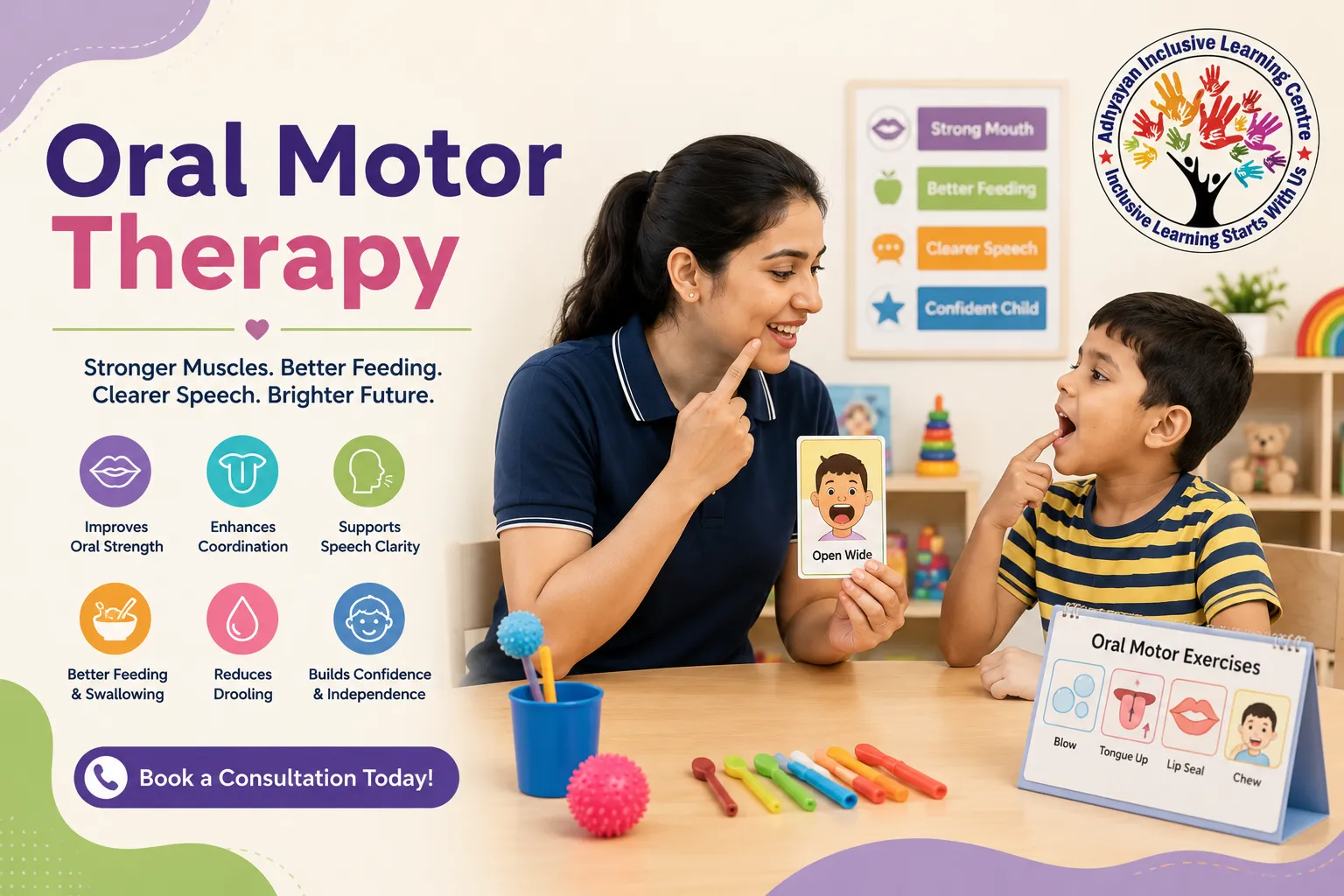
Most parents have never heard the term "oral motor therapy" until a therapist mentions it during an evaluation. And once they hear it, the questions come fast. Is this the same as speech therapy? Why does my child need exercises just to eat or talk? Is blowing bubbles in a clinic really considered treatment?
These are fair questions, and the honest answers are a little more nuanced than most quick internet explanations let on. This article walks through what oral motor therapy actually does, who benefits from it, what a real session looks like, and where its limits are, because knowing both the value and the boundaries of a therapy is what actually helps a parent make a good decision.
What Is Oral Motor Therapy
Oral motor therapy focuses on the muscles used for eating, drinking, and forming speech sounds: the lips, tongue, jaw, cheeks, and soft palate. The goal is to build strength, coordination, and awareness in these muscles so a child can chew safely, swallow properly, and move their mouth with the control needed for clear speech.
It sounds simple on paper, but these muscles do a surprising amount of coordinated work every day. Chewing a piece of roti, drinking from an open cup, and saying a word like "banana" all rely on precise, timed movements of the same small set of muscles. When those muscles are weak, poorly coordinated, or under-sensitive, a child can struggle with feeding, drooling, or speech clarity, sometimes all three at once.
Oral Motor Therapy vs Speech Therapy: Where the Line Actually Sits
This is where a lot of confusion comes from, so it is worth being precise. Oral motor therapy is not the same thing as speech therapy, though the two often work side by side.
Speech therapy targets the actual sounds, words, and language a child produces. Oral motor exercises for speech therapy support the physical foundation underneath that, the strength and control of the muscles that shape sound. Think of it like the difference between teaching someone the choreography of a dance and separately building the strength in their legs to hold each position. Both matter, but they are not interchangeable.
It is also worth knowing that current research is mixed on how much non-speech oral motor exercises (like blowing whistles or puffing cheeks) directly improve articulation on their own. Most speech-language pathologists today use oral motor work mainly to address feeding and oral muscle tone, while pairing it with direct speech sound practice for articulation goals. A good therapist will be transparent about which part of your child's plan is targeting which outcome, rather than presenting oral motor exercises as a stand-alone fix for unclear speech.
Signs a Child May Need Oral Motor Therapy
A few patterns tend to show up again and again in children who benefit from this kind of support:
- Drooling well past the age it is typically expected to stop
- Frequent gagging on textured foods, or refusing to move past purees
- Difficulty chewing, or swallowing food whole without properly chewing it
- An open mouth resting posture, with the tongue often visible
- Weak or unclear speech sounds, particularly with sounds that need strong lip or tongue control
- Strong food texture aversions that go beyond typical picky eating
- Frequent choking or coughing during meals
Not every child with one of these signs needs formal therapy, but a pattern of several together is usually worth a proper assessment rather than a wait-and-see approach.
What an Oral Motor Assessment in Occupational Therapy Looks Like
Before any exercises begin, a therapist needs a clear picture of what is actually going on. An oral motor assessment in occupational therapy usually looks at:
- Muscle tone in the lips, cheeks, jaw, and tongue, checking whether it is too tight, too loose, or uneven on one side
- Range of motion, such as how far the tongue can move side to side or how wide the jaw opens
- Sensory responses in and around the mouth, since some children are under-responsive and others are highly sensitive to textures or touch
- Feeding behavior, observed directly during a meal or snack whenever possible, rather than only through a parent's description
- Coordination between breathing, sucking, chewing, and swallowing
This assessment is what shapes everything that follows. Two children who both "drool a lot" might need completely different treatment plans once the underlying cause is understood.
What Oral Motor Therapy Actually Involves
A typical program blends structured exercises with everyday, functional practice. Some common oral motor activities used in occupational therapy and speech sessions include:
Strengthening exercises Blowing bubbles, whistles, or through straws to build lip and cheek strength. Pushing the tongue against a spoon or tongue depressor for light resistance work.
Range of motion work Practicing tongue lateralization (moving side to side), lip rounding and spreading, and controlled jaw opening and closing.
Sensory activities Using different textures, temperatures, and vibration (sometimes with tools like textured teethers or vibrating oral motor tools) to build awareness in children who are under-responsive around the mouth.
Feeding-based practice Introducing new food textures gradually, working on chewing patterns, and practicing safe swallowing with foods chosen specifically for the child's current skill level.
Play-based integration Since most of this work is done with young children, therapists build these exercises into games, songs, and daily routines rather than presenting them as isolated drills. A child is far more likely to stay engaged blowing out candles on a pretend cake than repeating a clinical exercise on command.
Sessions are usually short and frequent rather than long and occasional, since these muscles respond better to consistent, repeated practice than to infrequent intense workouts.
Who Benefits Most From Oral Motor Therapy
While it is often associated with children on the autism spectrum, oral motor therapy supports a wider group, including children with:
- Autism spectrum disorder, where feeding and sensory challenges around the mouth are common
- Cerebral palsy, where muscle tone directly affects feeding and swallowing safety
- Down syndrome, where lower muscle tone can affect both feeding and speech clarity
- Premature birth history, where oral muscles may be less developed at the expected age
- General speech delay, where weak oral muscle control is contributing to unclear articulation
- Persistent feeding difficulties with no other medical cause identified
Because feeding and speech are so closely linked, many children who start therapy for one area end up seeing improvements in the other as well.
What Progress Actually Looks Like
Parents often expect a dramatic before-and-after, and it rarely works that way. Progress in oral motor therapy tends to be gradual and practical: a child accepting one new food texture a month, drooling less throughout the day, chewing more efficiently at meals, or producing a previously difficult sound with a little more clarity.
Therapists typically track this through direct observation, feeding logs, and periodic reassessment rather than a single test score, so ask your provider how they measure and share this progress with you. If a program cannot clearly explain how they are tracking whether therapy is working, that is worth asking more about.
How This Fits Into a Bigger Plan
Oral motor therapy rarely stands entirely on its own. It usually works best as one part of a coordinated plan alongside broader speech therapy services for language and articulation goals, and occupational therapy for sensory processing, fine motor development, and daily self-care skills like feeding independence. When these areas are handled by a connected team rather than separate, uncoordinated providers, a child's progress in one area tends to reinforce progress in the others.
Questions Worth Asking Before Starting
A quick checklist before committing to a program anywhere:
- Was there a proper oral motor assessment before therapy started, not just a general intake form?
- Can the therapist explain clearly whether a specific exercise is targeting feeding, sensory tolerance, or speech, and why?
- Is progress tracked in a way you can actually see and understand over time?
- Does the team coordinate with speech therapy or occupational therapy if your child needs both?
- Are you shown simple activities to continue at home, since a weekly session alone rarely builds lasting muscle habits?
Oral Motor Therapy Support at AILC
Adhyayan Inclusive Learning Centre offers oral motor therapy as part of a connected speech and occupational therapy program, built around a proper assessment rather than a generic exercise sheet. Children are evaluated for muscle tone, feeding patterns, and sensory responses before any exercise plan is created, and progress is reviewed regularly so the plan keeps pace with the child rather than staying static.
For families based in South Delhi and across the NCR who want feeding, speech, and oral motor concerns looked at together rather than in separate appointments across the city, our team works out of one centre in South Extension, with therapists who coordinate directly with each other on your child's case.
If this sounds like the kind of support your child needs, the easiest next step is simply reaching out and describing what you have been noticing at home or during meals. A short conversation with our team is usually enough to know whether a full assessment makes sense.