When a family first hears the word autism in connection with their child, the days that follow are usually a blur of searching, second guessing, and trying to make sense of conflicting information online. Having spent years working alongside families going through this exact experience, I want to write this guide the way I would explain it to a parent sitting across from me, honestly, without jargon, and without overselling what therapy can and cannot do.
Autism treatment in Delhi has genuinely improved over the last decade. Better awareness among paediatricians, more accessible diagnostic tools, and a growing number of trained professionals mean families today have far more support available than they did even ten years ago. But that also means navigating more choices, more opinions, and sometimes more confusion about where to actually begin.
Understanding What Autism Treatment Actually Means
One of the first things I tell parents is this, autism is not something that gets cured in the way an infection does. It is a lifelong neurodevelopmental difference, and treatment is really about building skills, reducing challenges, and helping a child function and thrive in their own way. No medication reverses the core features of autism. What genuinely helps is structured, consistent therapy tailored to a child's specific profile.
This is important to understand early, because it shapes expectations. Families who go in expecting a quick fix often feel discouraged a few months in in when progress feels slow. Families who understand that this is a gradual, skill building process tend to stay more consistent, and consistency is often the single biggest factor separating meaningful progress from stalled therapy.
Why Early Diagnosis Changes Everything
If there is one thing every experienced professional in this field agrees on, it is this, earlier is almost always better. Signs of autism can sometimes be noticed as early as twelve to eighteen months, showing up as delayed babbling, limited eye contact, or reduced response to their name. By age two to three, these indicators tend to become clearer.
Starting autism treatment in Delhi before the age of five consistently shows the strongest outcomes in communication, social skills, and adaptive behaviour. This does not mean older children or even adults cannot benefit from therapy, they absolutely can, but the brain's flexibility in early childhood does make certain kinds of skill building noticeably faster during those years. If you notice delayed speech, limited social engagement, repetitive behaviours, or unusual sensory reactions in your child, it is worth getting a proper developmental assessment rather than waiting to see if things improve on their own.
What a Proper Assessment Looks Like
A good autism therapy expert in Delhi will never jump straight into treatment without a structured evaluation first. Diagnosis is typically based on developmental history and direct behavioural observation, often supported by standardised tools that look at social communication patterns, repetitive behaviours, and developmental milestones.
This assessment matters because autism presents differently in every child. Some children struggle primarily with verbal communication, others communicate clearly but find social interaction exhausting or confusing, and some experience intense sensory sensitivities that affect their daily functioning far more than communication does. A thorough assessment allows a treatment team to build a plan around your specific child rather than a generic template.
The Core Therapies Involved in Autism Treatment
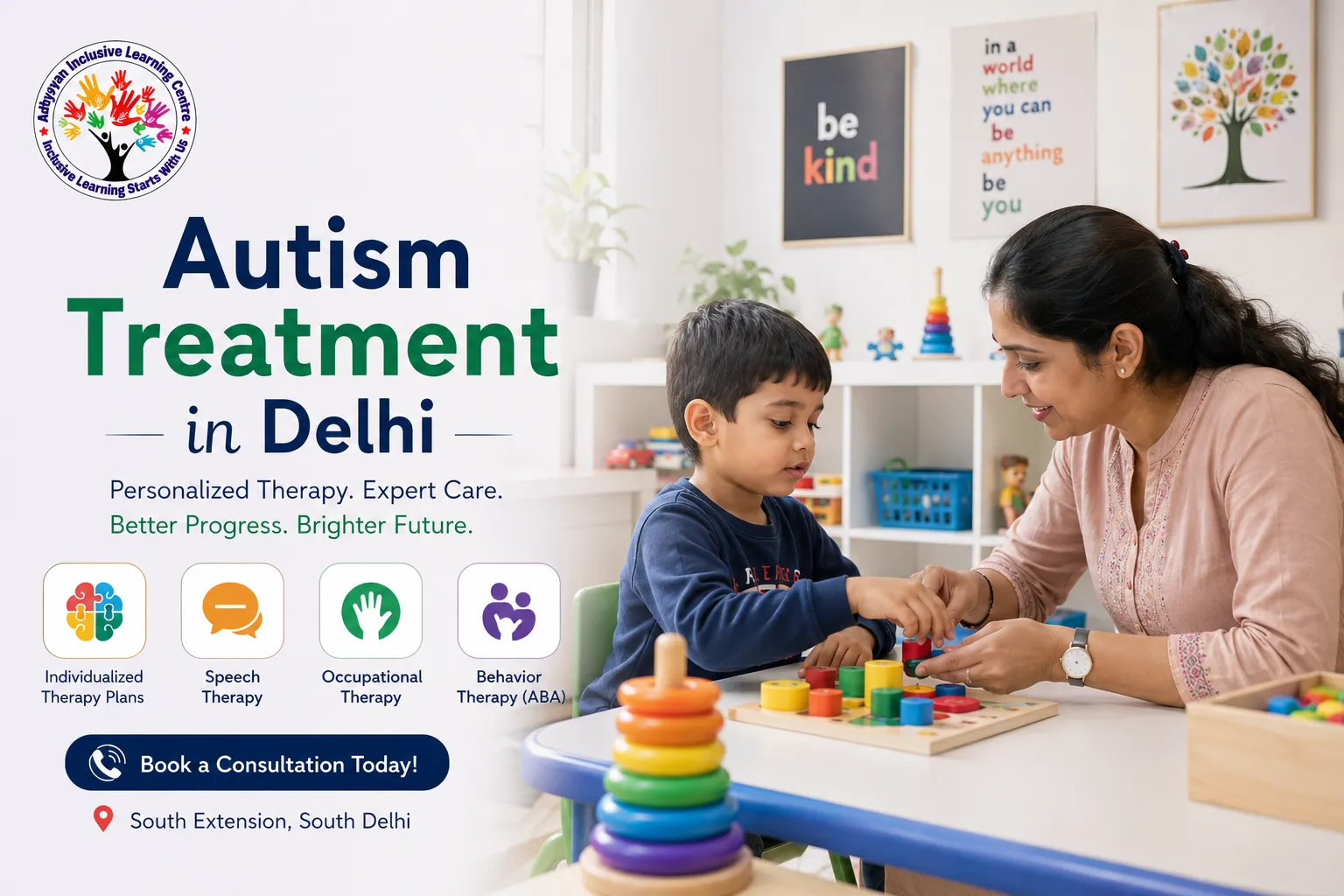
Effective autism treatment in Delhi almost always involves more than one type of therapy working together. Based on years of watching treatment plans play out, here are the main pillars most programs are built around.
Speech and language support A large number of children on the spectrum face communication challenges, whether that means delayed speech or difficulty with social communication like turn taking and understanding non verbal cues. A therapist offering speech therapy for autism usually focuses first on building functional communication, through spoken words, gestures, or picture based systems, before layering in more advanced conversational skills.
Sensory and daily living skills Many children with autism experience sensory processing differences that affect everyday tasks like eating, dressing, or handling loud environments. This is where occupational therapy for autism becomes essential, helping children build motor coordination, self care independence, and better regulation of sensory input.
Structured behavioural intervention For many families, aba therapy for autism forms a core part of the treatment plan, using positive reinforcement to build helpful behaviours and reduce behaviours that interfere with learning, social interaction, or safety. This works best when it is genuinely individualised rather than applied rigidly across every child.
A skilled autism therapy expert in Delhi will usually combine these approaches based on your child's specific profile, adjusting the mix as the child grows and their needs shift.
Finding the Best Autism Therapist in Delhi for Your Child
Parents often ask me how to identify the best autism therapist in Delhi for their specific situation, and honestly, there is no single universal answer. What matters is finding someone with genuine hands on experience treating autism specifically, not just general developmental delays, along with a willingness to explain their reasoning and involve you as a parent throughout the process.
A few practical questions can help you evaluate this during an initial consultation. Ask how they plan to assess your child. Ask what specific therapies they recommend and why. Ask how they will track progress and communicate it to you over time. A therapist who welcomes these questions and answers them clearly is usually someone worth trusting with your child's care. One who becomes vague or defensive is worth reconsidering, regardless of how impressive their credentials look on paper.
If you are looking for a team that genuinely takes this approach, AILC Special School works with a multidisciplinary group of speech therapists, occupational therapists, and behavioural specialists who build each child's plan around their specific needs rather than a fixed template.
What Families Should Expect Over Time
Progress in autism treatment rarely looks like a straight upward line. There will be weeks where a skill clicks quickly, and others where things feel stagnant or even briefly regress during periods of change, illness, or disrupted routine. This is completely normal, and an experienced therapist will help you understand these patterns rather than let you panic over every small setback.
What tends to matter most over the long run is consistency, both in attending sessions regularly and in reinforcing strategies at home between sessions. Families who actively participate in therapy, practising recommended techniques during daily routines, tend to see noticeably faster and more lasting progress compared to families who treat therapy as something that only happens within the clinic walls.
Why Delhi Has Become a Strong Destination for Autism Care
Delhi's growth as a hub for autism treatment has been driven largely by an increasing concentration of multidisciplinary centres, bringing speech therapists, occupational therapists, special educators, and behavioural specialists together under coordinated care rather than scattered, disconnected appointments. This kind of integrated approach tends to produce more consistent outcomes than piecing together separate specialists on your own.
That said, not every centre claiming to offer autism treatment in Delhi has equal depth of experience. It is worth visiting a centre in person, observing how therapists interact with children, and asking about their specific experience with autism spectrum cases before committing to a long term program.
Conclusion
Autism treatment is not a single appointment or a short course of sessions, it is a long term, evolving journey that works best when built around your specific child rather than a generic checklist. The families who see the most meaningful progress over the years are usually the ones who start early, ask thoughtful questions, choose a genuinely experienced autism therapy expert in Delhi, and stay actively involved throughout the process.
Take the time to understand your options, trust your own observations as a parent, and do not hesitate to have detailed conversations with more than one professional before deciding on a treatment path. The right support, started early and applied consistently, can genuinely change the trajectory of your child's development and confidence over time.