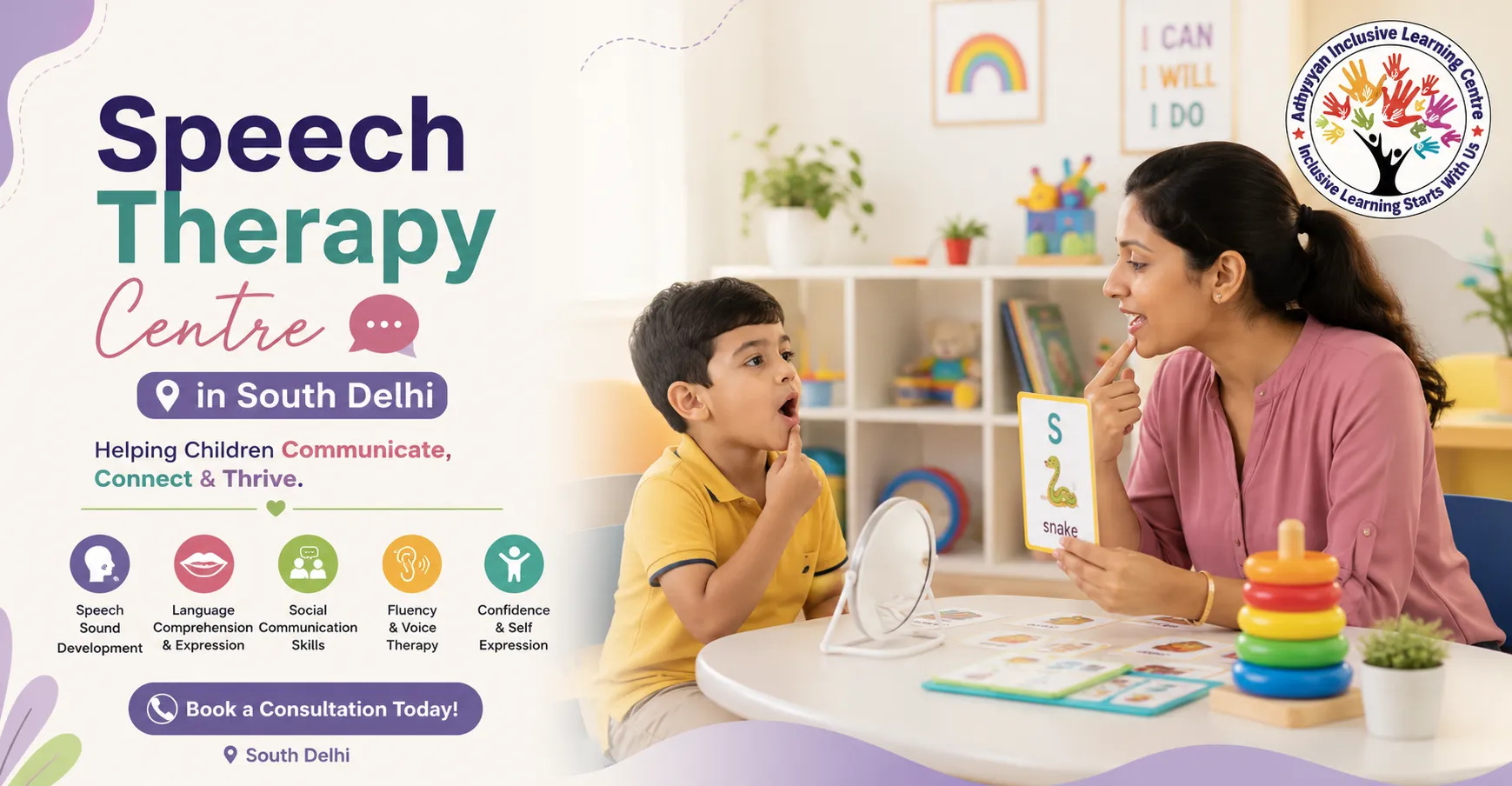
If you are a parent sitting with worry because your child is not talking the way other kids their age do, you are not alone. Every week, dozens of families walk into a speech therapy centre in South Delhi asking the same question: "Is this normal, or should we be doing something about it?" After years of working closely with children and families in this field, I can tell you that the earlier you ask that question, the better the outcome usually is.
South Delhi has slowly become one of the more trusted destinations for families looking for genuine, well structured speech therapy support. Between the number of qualified therapists, better awareness among schools and paediatricians, and the sheer variety of centres available, parents today have more options than they did even five years ago. But more options also means more confusion. So let us break this down properly.
Why Speech Therapy in South Delhi Has Grown So Much
A decade ago, speech delays were often brushed aside with comments like "he will start talking on his own" or "girls talk earlier than boys, don't worry." Today, thanks to better paediatric screening and more informed schools, parents are catching these signs much earlier. This is one of the biggest reasons demand for Speech Therapy in South Delhi has grown steadily over the years.
Another reason is simply access. South Delhi has a strong concentration of paediatricians, developmental specialists, and special schools, which naturally created space for dedicated speech and language centres to set up here. Parents no longer have to travel across the city for a proper evaluation. A good speech therapy centre in South Delhi is now often just a short drive away.
Signs Your Child May Need Speech Therapy
In my years around this field, I have noticed parents usually fall into two categories. Either they wait too long because they assume the child will "catch up," or they panic too early over something that is completely age appropriate. Here are a few signs that genuinely warrant a proper assessment at a speech therapy centre in South Delhi:
- Limited vocabulary compared to same age peers
- Difficulty forming two or three word sentences by age two and a half
- Trouble being understood by people outside the immediate family
- Struggling to follow simple instructions
- Stuttering that continues beyond the age of four
- Avoiding eye contact or social interaction along with speech delay
- Difficulty chewing, swallowing, or unusual drooling beyond the expected age
If even two or three of these sound familiar, it is worth getting a proper opinion rather than waiting it out. Most experienced therapists will tell you that early intervention, even by a few months, tends to make a noticeable difference in how quickly a child progresses.
What Actually Happens During Speech Therapy
Parents often imagine speech therapy as a teacher sitting with a child and repeating words until they say it correctly. The reality is far more layered than that. A proper session at a speech therapy centre in South Delhi usually starts with a detailed assessment covering language comprehension, expression, articulation, oral motor skills, and sometimes even social communication.
From there, therapists build a plan specific to that child. No two children get the exact same programme, even if their diagnosis sounds similar on paper. This is something I have seen make a real difference over the years. A cookie cutter approach simply does not work with speech and language development, because every child's triggers, interests, and challenges are different.
Sessions typically use a mix of play based activities, structured drills, picture cards, storytelling, and sometimes technology based tools depending on the child's age and needs. For toddlers, therapy often looks like play. For older children, it can look more like structured practice, almost like a skill building class.
If you are specifically looking into speech therapy for kids, it helps to understand that consistency matters more than intensity. A child attending two sessions a week regularly for six months will usually show better progress than a child doing five sessions a week for one month and then stopping.
Speech Therapy for Children With Autism
One area where South Delhi centres have genuinely improved over the years is autism specific speech and language support. Children on the autism spectrum often need a very different approach compared to children with a simple articulation delay. Communication goals for these children go beyond just speaking clearly. It involves building functional communication, whether that is through words, gestures, picture exchange systems, or assistive devices.
A well trained team offering speech therapy for autism usually works closely with occupational therapists and special educators as well, because communication challenges in autism rarely exist in isolation. Sensory needs, behaviour patterns, and social understanding all tie into how a child communicates. Parents searching for a speech therapy centre in South Delhi for an autistic child should specifically ask about this kind of collaborative approach, rather than settling for a centre that treats speech in complete isolation from everything else.
The Role of Oral Motor Therapy
Something that often gets overlooked is the physical side of speech. Talking is not just a language skill, it is also a motor skill. The muscles of the lips, tongue, jaw, and cheeks need adequate strength, coordination, and control to produce clear speech sounds.
This is where oral motor therapy becomes important, especially for children who have low muscle tone, feeding difficulties, or unclear speech that goes beyond a typical developmental delay. In my experience, parents are often surprised to learn that something as simple as difficulty blowing bubbles or chewing certain foods can actually be connected to speech clarity later on. A good therapist will pick up on these connections during assessment rather than treating speech in isolation from oral function.
What to Look For in a Speech Therapy Centre in South Delhi
With so many centres available now, it helps to know what actually separates a good one from an average one. Based on years of observing this space, here is what I would suggest parents look at:
Qualified and experienced therapists Always ask about the qualifications of the therapist who will actually be working with your child, not just the centre's overall reputation. A centre may have a great name, but your child's progress depends on the individual therapist's skill and experience.
Individualised assessment before starting therapy If a centre jumps straight into generic sessions without a proper evaluation, that is a red flag. Every good speech therapy centre in South Delhi starts with a detailed assessment.
Transparent progress tracking You should be getting regular updates on what goals are being worked on, what progress looks like, and what the next steps are. Therapy without visible milestones tends to lose direction over time.
Parent involvement The best outcomes almost always happen when parents are trained to reinforce strategies at home. A centre that only works with the child during sessions and does not involve parents is missing a huge part of the equation.
Comfortable environment for the child Children do not perform well in clinical, intimidating spaces. Look for a centre that feels warm and engaging rather than sterile.
Speech Therapy Services for Children Beyond the Diagnosis
It is worth remembering that speech therapy services for children are not only for diagnosed conditions like autism or apraxia. Plenty of children simply need support with articulation, stuttering, language delay, or social communication skills without any formal diagnosis attached. If your child's teacher has mentioned unclear speech, or if you personally feel something is off, that alone is reason enough to get an assessment done. You do not need to wait for a diagnosis to seek help.
Delhi as a city has genuinely improved its access to quality paediatric therapy over the last several years, and speech therapy for children in Delhi is now far more structured and evidence based than it used to be. Parents today have access to properly trained speech language pathologists, better assessment tools, and centres that follow international best practices rather than outdated methods.
Conclusion
Choosing the right speech therapy centre in South Delhi is not just about proximity to your home, though that matters for consistency. It is about finding a team that genuinely understands your child, communicates openly with you, and adjusts their approach as your child grows and changes.
If you are exploring options, it is worth visiting a well established speech therapy centre in Delhi and asking detailed questions before committing. Speak to the therapist directly if possible, ask about their experience with children similar to yours, and trust your own observation of how comfortable your child feels in that space.
Speech and communication skills lay the foundation for so much of a child's confidence, social life, and academic success later on. Getting the right support early is one of the most meaningful things a parent can do, and with the resources now available across South Delhi, that support is more accessible than ever.