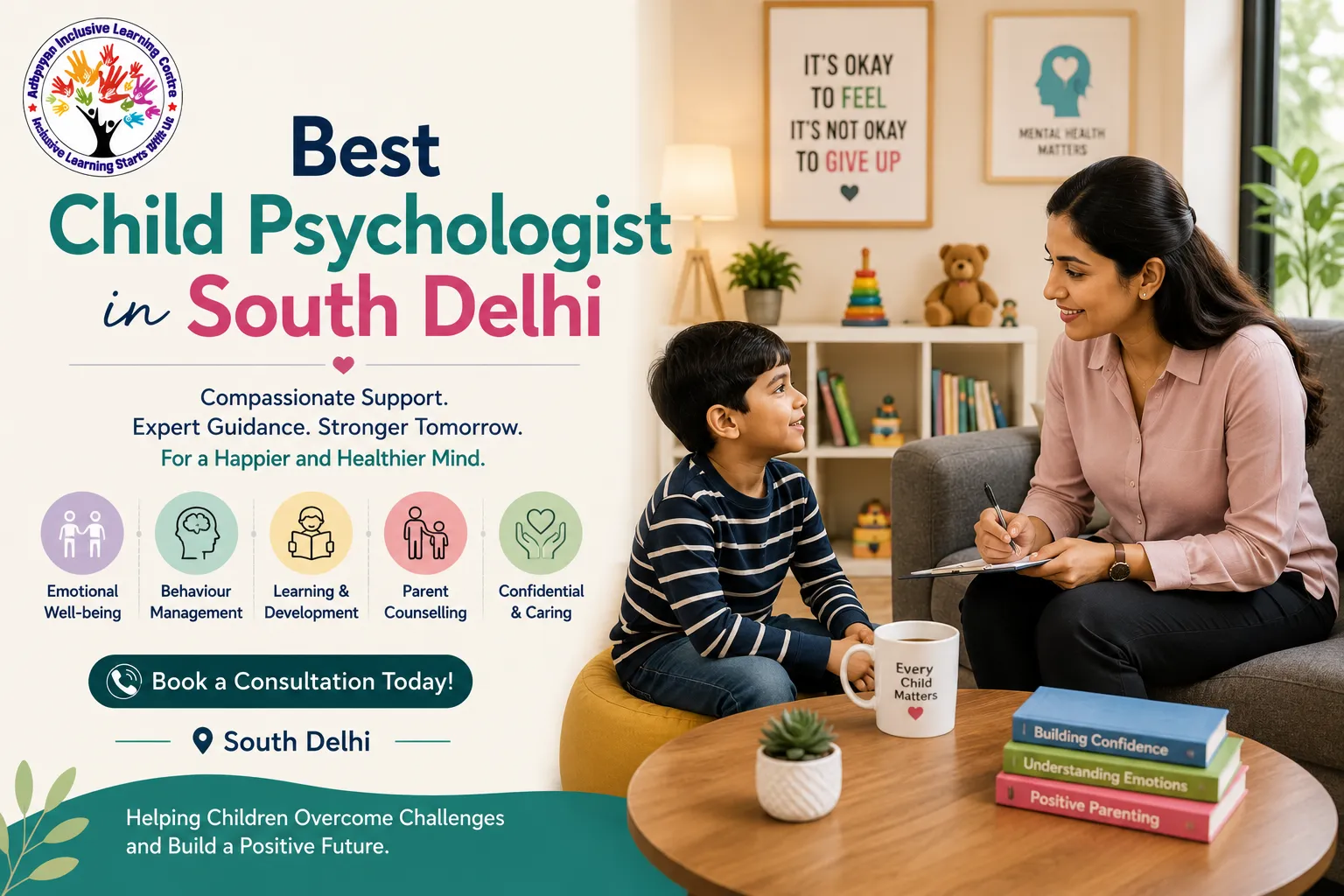
Every parent reaches a point where they pause and wonder if their child's behavior, emotions, or development need more than just patience and time. Maybe it is a sudden drop in academic performance, ongoing meltdowns that seem disproportionate to the situation, difficulty making friends, or a nagging feeling that something about your child's emotional world needs a closer look. These moments are more common than most parents realize, and reaching out for professional support is often the single most helpful decision a family can make.
Having worked closely with clinical teams supporting children and families across Delhi, one thing becomes clear over years of practice. Parents rarely come in with a simple, single concern. They come in carrying worry, self doubt, and sometimes guilt, wondering if they missed something or could have done things differently. A good child psychologist does not just assess a child. They walk alongside the entire family, offering clarity, reassurance, and a genuine plan forward.
Why South Delhi Has Become a Hub for Child Psychology Services
South Delhi has developed into one of the most well established areas for child mental health and developmental services in the city, and for good reason. The area is home to some of the most experienced clinical psychologists, developmental pediatricians, and specialized therapy centres in the region. Families searching for the best child psychologist in south delhi often find that the concentration of expertise here, combined with easy accessibility from neighborhoods like Greater Kailash, Defence Colony, Saket, and Hauz Khas, makes it a natural choice for consistent, long term therapeutic support.
This matters more than it might seem. Child psychology is rarely a one time consultation. It usually involves regular sessions over weeks or months, and sometimes longer for more complex developmental concerns. Having a reliable, experienced practice nearby means fewer missed sessions, easier scheduling around school hours, and a smoother overall experience for both the child and the family.
What Does a Child Psychologist Actually Do
There is often confusion between the roles of a child psychologist, a counselor, and a psychiatrist, and clearing this up helps parents know what to expect. A child psychologist is trained to assess and support emotional, behavioral, cognitive, and developmental concerns in children through structured evaluation and therapeutic techniques, without prescribing medication. Their work typically includes behavioral assessments, emotional regulation support, family guidance, and structured interventions tailored to the child's age and specific difficulties.
A significant part of this work involves detailed evaluation before any intervention begins. This is where Psychometric Evaluation becomes an essential first step. These standardized assessments help measure a child's cognitive abilities, attention, emotional functioning, and behavioral patterns objectively, rather than relying solely on parent observation or classroom feedback. The results give both the psychologist and the family a clear, evidence based starting point, which shapes everything that follows in the treatment plan.
Common Reasons Parents Seek a Child Psychologist
Parents often assume they need to wait until a problem becomes severe before seeking help. In practice, earlier consultation almost always leads to better outcomes. Some of the most common reasons families reach out include persistent anxiety or excessive worry, difficulty regulating anger or frustration, struggles with peer relationships or bullying, sudden changes in behavior following a stressful event like divorce or relocation, academic difficulties that seem tied to attention or motivation issues, and developmental concerns that may point toward conditions like ADHD, learning disabilities, or autism spectrum disorder.
It is worth noting that seeking help does not mean something is fundamentally wrong with a child. Many of the children who benefit most from psychological support are simply going through a difficult phase, adjusting to a life transition, or need help building specific coping skills that have not yet developed naturally.
How Child Counselling Fits Into the Process
Once an evaluation is complete, therapy typically moves into a structured, ongoing process. This is where Child Counselling plays a central role. Unlike adult counselling, which often relies heavily on conversation, child counselling uses age appropriate techniques like play, storytelling, art, and structured activities to help children express emotions and thoughts they may not yet have the vocabulary for.
A skilled child counselor builds trust gradually, often over several sessions, before diving into deeper emotional work. Sessions might look playful from the outside, a child drawing a picture, arranging toy figures, or playing a simple game, but every activity is chosen deliberately to help the therapist understand the child's inner world and to teach coping strategies in a way that feels natural rather than clinical.
Parents are almost always involved in this process too, whether through separate parent guidance sessions or periodic updates on progress and strategies to reinforce at home. This collaborative approach tends to produce far better and longer lasting results than therapy that happens in isolation from family life.
When Developmental Concerns Are Part of the Picture
Sometimes what begins as a search for emotional or behavioral support uncovers a broader developmental concern. A child who struggles socially, shows delayed language, or has unusually intense reactions to sensory input may benefit from a more comprehensive developmental evaluation. In cases where autism spectrum disorder is suspected or confirmed, families are often guided toward more specialized, coordinated care. Comprehensive Autism Treatment in Delhi typically combines psychological support with speech therapy, occupational therapy, and behavioral intervention, ensuring the child receives well rounded care rather than a single, isolated form of treatment.
This kind of integrated approach tends to work best because childhood development rarely fits neatly into one category. A child's emotional struggles, social difficulties, and developmental profile are often deeply connected, and addressing them together, rather than in separate silos, leads to more meaningful and sustainable progress.
The Importance of Timing and Early Support
One point that experienced clinicians emphasize again and again is timing. Childhood is a period of remarkable brain plasticity, meaning new skills, coping strategies, and emotional regulation techniques are absorbed more readily at younger ages. This is precisely why Early Intervention programs exist, designed specifically to catch and address developmental or emotional concerns as early as possible, often before they compound into larger academic, social, or behavioral challenges.
Parents sometimes hesitate, hoping a child will simply grow out of a difficulty on their own. While this is sometimes true, waiting too long in cases where a genuine concern exists can mean a child enters school already behind socially or academically, which can affect self esteem and motivation for years afterward. A brief consultation, even if it ultimately confirms there is nothing to worry about, provides peace of mind and a clear path forward either way.
What to Look for When Choosing a Child Psychologist
Families researching the best child psychologist in delhi ncr often feel overwhelmed by the number of options available, and understandably so. A few practical factors can help narrow the search meaningfully. Look for psychologists with specific training and experience in child and adolescent psychology, rather than general practice alone. Ask about their approach to evaluation, since a thorough intake process usually indicates a more thoughtful, individualized treatment plan. Consider the clinic's environment as well, since children respond better in warm, welcoming spaces designed with their comfort in mind rather than a purely clinical setting.
It also helps to ask how the practice involves parents in the process, since ongoing communication between therapist and family often determines how much progress translates from the therapy room into daily life. Many families searching for a child psychologist in delhi find that centres offering a full range of connected services, psychological evaluation, counselling, and developmental therapies under one roof, provide a smoother, more coordinated experience than juggling multiple separate providers.
Conclusion
If you are reading this because you are worried about your child, take some comfort in knowing that you are already doing the most important thing, paying attention and seeking answers. Every child's journey is different, and there is no single timeline or formula for progress. What matters most is finding a psychologist and clinical team who take the time to genuinely understand your child, not just their symptoms or diagnosis, and who partner with your family every step of the way. With the right support, most children build the skills, confidence, and emotional resilience they need to thrive, both now and well into the future.