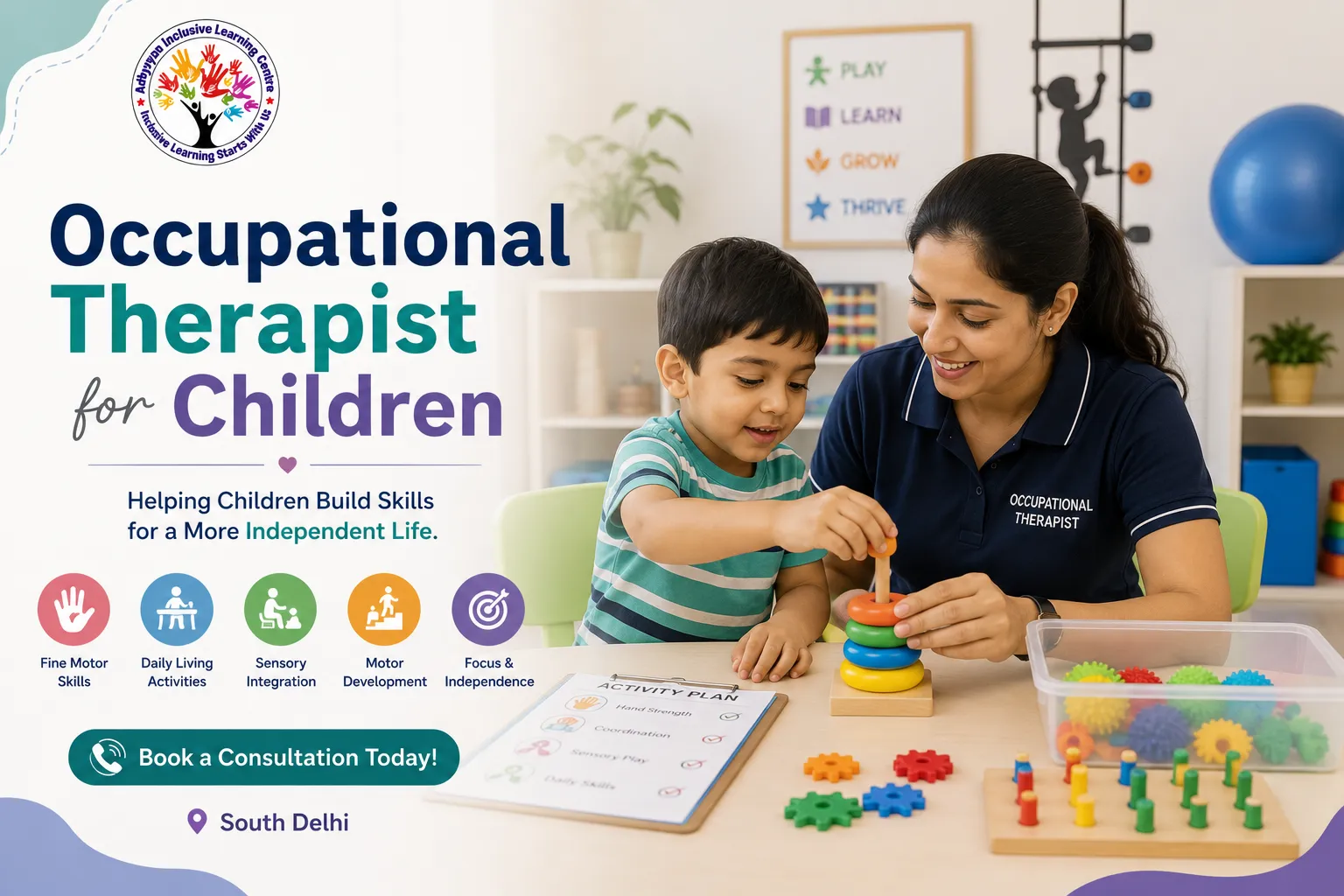
If you have ever watched your child struggle to hold a pencil, button a shirt, sit still through a meal, or cope with loud noises at a birthday party, you already know how exhausting these small daily battles can be, both for the child and for you. Parents often assume these are phases that children will simply grow out of. Sometimes that is true. But sometimes these struggles are signals that a child's sensory, motor, or developmental system needs a bit of extra support. This is often the point where parents start searching for an occupational therapist for children near me, unsure of what to expect but wanting answers. That is exactly where a pediatric occupational therapist steps in.
Having worked closely with families and clinical teams supporting children with developmental delays, sensory processing difficulties, and autism spectrum conditions, one thing becomes clear over time: occupational therapy is not about "fixing" a child. It is about understanding how a child experiences the world and building the skills that let them participate in it more comfortably, confidently, and independently.
What Does an Occupational Therapist for Children Actually Do?
Occupational therapy, or OT, focuses on helping children develop the skills they need for everyday life, what therapists call "occupations." For a child, an occupation is not a job. It is play, feeding, dressing, writing, socializing, and simply moving through the day.
A pediatric occupational therapist looks at a child holistically. They assess fine motor skills like grasping a crayon, gross motor skills like jumping or climbing stairs, sensory processing like tolerance to touch or sound, and functional skills like brushing teeth or tying shoelaces. Based on this assessment, therapists design individualized activities and interventions that feel like play to the child but are carefully structured to build specific neurological and physical pathways.
This is one of the most misunderstood parts of the profession. Parents sometimes expect OT sessions to look like a classroom, with worksheets and instructions. In reality, a session might involve swinging on a therapy swing, squeezing therapy putty, navigating an obstacle course, or playing with sand and water. Every activity is chosen deliberately, targeting muscle strength, coordination, balance, sensory regulation, or attention, depending on what that particular child needs that day.
Signs That a Child May Benefit From Occupational Therapy
Every child develops at their own pace, and that is completely normal. However, certain patterns tend to stand out to trained therapists and pediatricians as worth a closer look. These include:
Difficulty holding utensils, crayons, or pencils well past the expected age. Trouble with buttons, zippers, or shoelaces. Avoiding certain textures of food, clothing, or surfaces. Being either extremely sensitive to touch, sound, or light, or seeking out intense sensory input constantly. Poor balance or clumsiness compared to peers. Difficulty sitting still or maintaining attention during structured tasks. Struggling with transitions between activities or environments. Delayed handwriting skills or reluctance to write.
None of these signs alone confirm a developmental concern. Children are wonderfully varied, and what looks unusual to one parent might be entirely typical for another child's temperament. But when several of these patterns appear together and persist over time, an evaluation by a qualified occupational therapist can offer clarity and, importantly, a plan.
Why Early Intervention Really Matters
There is a reason therapists, pediatricians, and researchers keep repeating the phrase "early intervention." The brain during early childhood is remarkably adaptable. This is often called neuroplasticity, the brain's ability to form new neural connections in response to learning and experience. The earlier a child receives targeted support, the more efficiently these new pathways form.
This does not mean older children cannot benefit from OT. They absolutely can, and progress is very much possible at any age. But addressing challenges early often means fewer secondary difficulties down the line. A child who struggles with fine motor skills in preschool, if left unaddressed, may begin to feel frustrated or embarrassed about writing by the time they reach primary school, which can affect confidence, classroom participation, and even friendships. Early support helps prevent this snowball effect.
Occupational Therapy and Autism
One area where occupational therapy has shown particularly strong outcomes is in supporting children on the autism spectrum. Many autistic children experience the world through a different sensory lens. Sounds that seem ordinary to others might feel overwhelming. Textures that most children ignore might feel unbearable. Everyday transitions, like moving from playtime to mealtime, can trigger genuine distress rather than simple reluctance.
Therapists trained in sensory integration techniques work with autistic children to build tolerance, regulation, and coping strategies in a way that respects the child's own pace and comfort level. Sessions might focus on improving motor planning, building communication through play, or helping a child self regulate when overwhelmed. The goal is never to make a child appear "typical." It is to expand what feels manageable and enjoyable for that individual child, whether that is participating in a classroom activity, tolerating a haircut, or playing alongside other children at the park. Families looking for structured, experienced support often turn to a dedicated occupational therapy for autism program, where therapy plans are built specifically around the sensory and developmental profile of autistic children rather than a generic template.
What Happens During an Occupational Therapy Evaluation
Parents often ask what the first appointment looks like, and understandably, walking into a clinic for the first time can feel intimidating. Typically, an occupational therapist begins with a detailed conversation with parents about developmental history, daily routines, and specific concerns. This is followed by direct observation and standardized assessments that measure fine motor skills, gross motor skills, sensory processing, visual motor integration, and self care skills like feeding and dressing.
Based on this evaluation, the therapist creates a personalized therapy plan with clear, measurable goals. These goals are revisited regularly, and progress is tracked over weeks and months. Good therapists also involve parents actively, sharing simple activities that can be practiced at home, because consistency between clinic sessions and daily life significantly speeds up progress.
The Parent's Role in the Process
One thing experienced therapists will tell you again and again: therapy works best as a partnership. A child might spend forty five minutes a week in a clinic, but they spend the rest of their week at home, at school, and in the community. Parents who understand the "why" behind each activity, not just the "what," tend to see faster and more lasting results.
This does not mean parents need to become therapists themselves. It simply means staying engaged, asking questions during sessions, and gently incorporating small strategies into daily routines, like giving a fidget toy during homework time or allowing an extra few minutes during transitions. Small, consistent efforts at home reinforce what happens in the therapy room.
Choosing the Right Occupational Therapist for Your Child
Not all therapy settings are the same, and finding the right fit matters. Look for a centre with therapists trained specifically in pediatric care, not just general occupational therapy. Ask about their experience with your child's specific concerns, whether that is sensory processing difficulties, fine motor delays, or autism spectrum support. A good clinic will also welcome parent involvement rather than treating sessions as a closed door process.
Environment matters too. Children respond better in spaces designed for them, with sensory friendly equipment, therapy swings, climbing structures, and tools that make sessions feel like play rather than a clinical chore. Families searching for a well established, experienced setup often explore a reputed occupational therapy centre in Delhi that offers individualized assessments and therapy plans built around each child's specific developmental needs.
A Gentle Reminder for Parents
If you are reading this because you are worried about your child, take a breath. Seeking an evaluation does not mean something is "wrong" with your child. It means you are paying attention, and that alone puts your child in a good position. Occupational therapy, at its heart, is about helping children feel more capable and comfortable in their own bodies and in their own world. With the right support, patience, and consistency, most children make meaningful progress, and many of the daily struggles that once felt overwhelming become manageable, and eventually, second nature.
Every child's journey looks different, and there is no single timeline for progress. What matters most is starting the conversation, asking the right questions, and finding a team of therapists who genuinely understand your child as an individual, not just a diagnosis.