Vocational Training for Autism in Delhi: Building Skills for Work and Independence
Parents of autistic teenagers often ask the same question: what happens after school? Vocational training for autism answers it by teaching the practical, social and workplace skills a young person needs to work, earn and live as independently as possible. The earlier planning begins, the more choices a family has.
This guide explains what vocational training for ASD includes, when to start, which skills are built at each stage, what Indian law says about education and employment for persons with disabilities, how to choose a vocational training centre for special needs in Delhi and what families can do at home. It builds on our overview of vocational training in Delhi for special needs learners with a focus on autism.
What Is Vocational Training for Autism?
Vocational training prepares a person for meaningful work. For autistic young people it goes beyond learning a trade. It combines job skills with communication, routines, self-care, money management and travel, because each of these affects whether a person can keep a job.
Autistic people bring real strengths to the workplace, such as attention to detail, reliability, focus on routines and deep knowledge of interests. Training aims to match these strengths to suitable roles and give the supports needed in the areas that are harder.
Why Planning Early Matters
Many autistic adults face high rates of unemployment or work below their ability, often because of gaps in support and not lack of skill. Planning for the move from school to adult life is called transition planning. Families who start in the early teens have time to try different activities, build routines, collect the right documents and arrange work experience before pressure builds at 18.
When Should Vocational Planning Begin?
Childhood: foundations
Communication, self-care, play, following routines and tolerance for change are the base. Early support through early intervention pays off later.
Early teens: exploring interests
Young people try household tasks, simple workshop and craft activities, computer basics and group projects. The goal is to learn what they enjoy and do well.
Mid to late teens: skill building
Training becomes more specific: workplace behaviour, time management, using money, travelling safely and practising a chosen skill area. Our guide on special education for teenagers in Delhi explains how academics and life skills fit together at this age.
Young adulthood: work experience
Internships, supervised work trials and supported employment let young people apply skills in real settings with coaching.
Core Skills in a Vocational Training Programme for ASD
- Daily living skills: grooming, cooking basics, cleaning, laundry and managing personal belongings
- Communication at work: asking for help, taking instructions, greeting colleagues and handling feedback. Skills like these build on social skills and communication development for ASD
- Emotional regulation: managing stress, taking breaks and coping with change
- Time and task management: following schedules, using checklists and completing tasks in order
- Money and travel: counting, budgeting, using digital payments and moving safely in the community
- Job-specific skills: examples include data entry, packaging, kitchen assistance, craft work, retail and office support, matched to the person's strengths
- Workplace rules and safety: punctuality, personal boundaries, hygiene and safe handling of tools
Supports That Make Training Work
Teaching methods matter as much as the content. Effective programmes for autistic learners usually include:
- Visual schedules and step-by-step checklists for each task
- Task analysis, which breaks a job into small steps taught in sequence
- Sensory-friendly settings with attention to noise, light and crowding
- Role play and practice before real situations, such as an interview or a customer interaction
- Gradual independence, with coaching reduced as skills grow
Rights and Schemes in India
The Rights of Persons with Disabilities Act, 2016 recognises autism spectrum disorder among the 21 specified disabilities. It provides for free education for children with benchmark disabilities between 6 and 18 years, reservation in government jobs for persons with benchmark disabilities (a benchmark disability means at least 40 percent), and a requirement for reasonable accommodation. Under the Act, the overall government job reservation is 4 percent, shared across disability categories, with autism falling in one of the groups.
Skill training for persons with disabilities is also supported through the Skill India system, which includes sector skill councils for disability-related training. Rules, cut-offs and schemes change, so check current notifications and confirm the disability certificate process with your local authority. A centre that works with older teens can tell you which documents to keep.
How to Choose a Vocational Training Centre for Special Needs
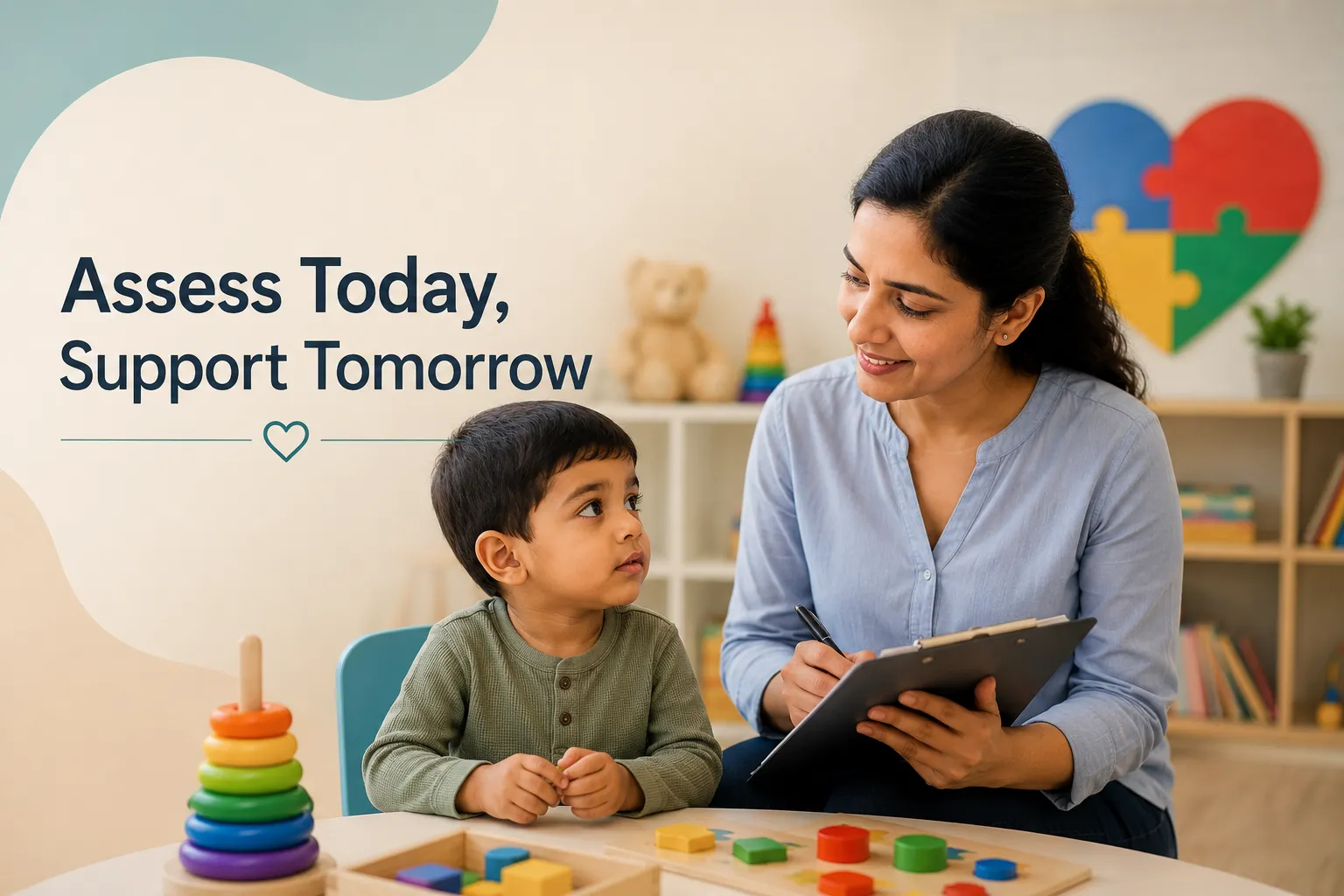
- Does the programme begin with an assessment of strengths, interests and support needs?
- Is there an individual plan with measurable goals?
- Are instructors trained to work with autism and other developmental needs?
- Does the centre include life skills and social skills, not only job tasks?
- Are there practical work experiences or partnerships with employers?
- Is there involvement of families and planning for the long term?
Our vocational training programme is designed around these principles, so that academic, therapeutic and vocational goals support one another.
How Families Can Prepare at Home
- Give regular household responsibilities, even small ones, and gradually increase them
- Practise real-life tasks such as buying an item, ordering food or using public transport with a plan
- Use visual schedules for the morning routine and chores
- Build on interests that could lead to a job, such as drawing, computers, cooking or gardening
- Talk about the future early and listen to what the young person wants
- Keep a simple portfolio of certificates, photos of completed work and references
Vocational Training for Autism at AILC, South Extension
AILC supports learners from early childhood through young adulthood, with special education, therapy and vocational training under one roof at E-17, 2nd Floor, South Extension Part 1, New Delhi. Our team has worked with children and young people with autism, ADHD, dyslexia and other developmental needs for more than 30 years, and our centre welcomes families from South Delhi and across Delhi NCR.
If you are planning the next stage for your son or daughter, book a consultation or call +91 98100 52388.