Managing Public Meltdowns: A Practical Guide
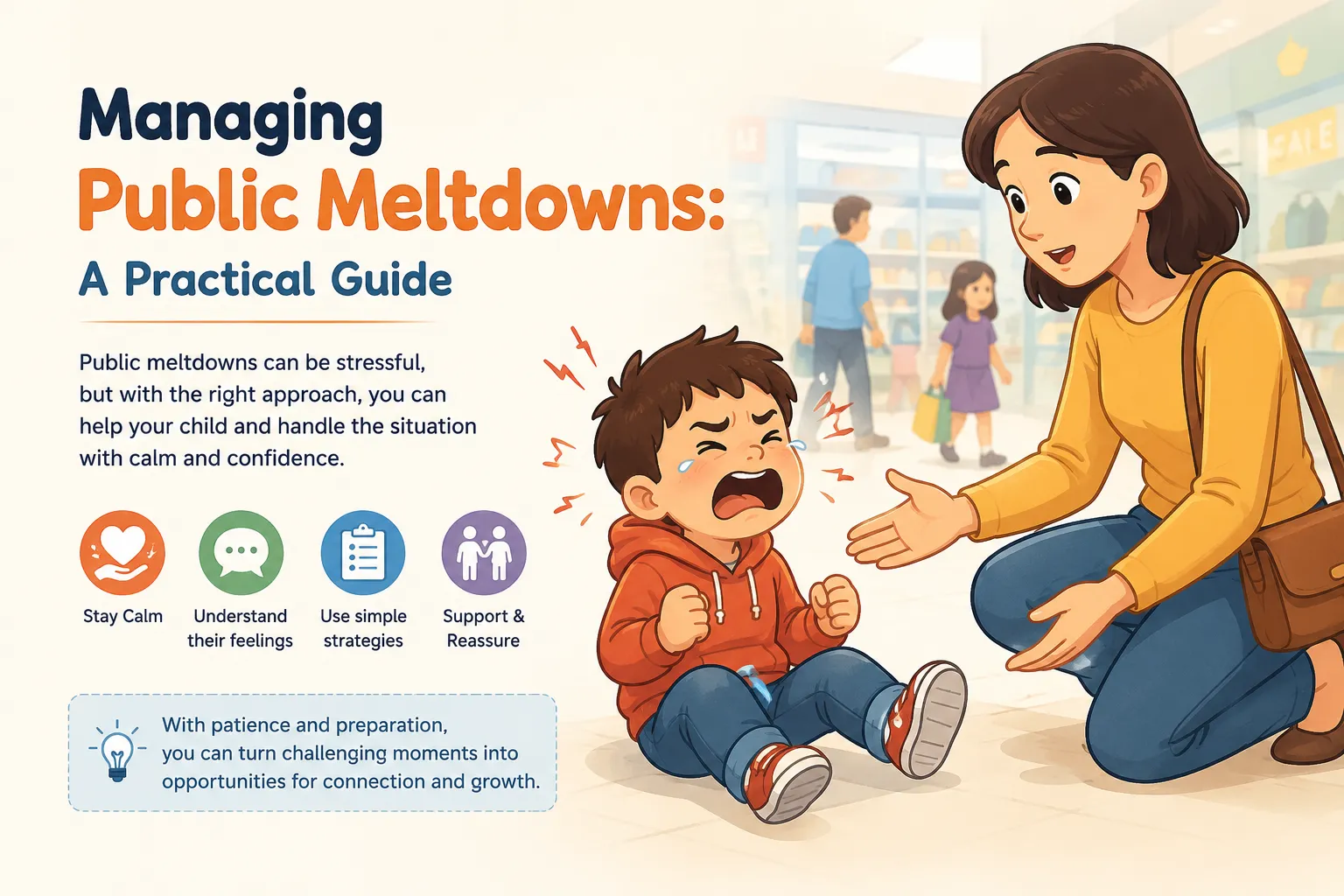
You are in the middle of a grocery store or a family wedding, and your child suddenly falls apart. The screaming, the crying, the collapsing on the floor, it all happens in seconds. And then come the stares. The whispered comments. The relative who leans in with "just give him a tight slap, he will stop." The stranger who says "someone needs discipline."
In that moment, you are not just managing your child. You are managing your own racing heart, the judgment of a room full of strangers, and a wave of shame that feels almost impossible to explain to anyone who has not lived it.
If this sounds familiar, you are far from alone. This is one of the most common experiences parents of children with sensory sensitivities, autism, ADHD or emotional regulation difficulties go through, and yet it is rarely spoken about openly. Most parents carry it quietly, assuming they are the only ones struggling. They are not.
You Are Not Alone in This, and Support Exists
Meltdowns can feel isolating, but they are also one of the most manageable challenges with the right strategies and support. Our behaviour modification programme works directly with children and parents to identify meltdown triggers and build practical coping strategies that actually work in real situations, not just in theory. For children whose meltdowns are linked to sensory overload, our occupational therapy programme helps build tolerance to sensory input over time so that everyday environments feel less overwhelming.
If you are exhausted from figuring this out alone, you can book a consultation and talk to our team about what is happening with your child specifically.
Meltdown or Tantrum? Understanding the Difference First
Before you can manage a meltdown, it helps to know that it is not the same as a regular tantrum, and treating it like one usually makes things worse.
A tantrum is typically goal driven. A child wants something, does not get it, and reacts. Tantrums usually stop once the child gets what they want, gets distracted, or realises the behaviour is not working.
A meltdown is different. It is not about getting something. It is a nervous system that has been overwhelmed, whether by sensory input, emotional overload, exhaustion, or an inability to communicate a need. A child in a meltdown is not choosing to misbehave. They have genuinely lost the ability to regulate themselves in that moment, and no reward or punishment will make it stop faster. In fact, trying to negotiate or discipline a child mid meltdown usually extends it.
Recognising which one you are dealing with changes everything about how you respond.
What Is Actually Happening During a Meltdown
During a meltdown, a child's brain shifts into a stress response. This can be triggered by loud noises, bright lights, crowded spaces, unexpected changes in routine, hunger, tiredness, or a buildup of small frustrations that finally spill over. For children who struggle to express what they are feeling in words, a meltdown becomes the only way the overwhelm can come out.
Understanding this is not about making excuses. It is about responding in a way that actually helps, instead of a way that feels instinctive but makes the situation worse.
What to Do in the Moment
Stay calm, even if you are not
Your child can pick up on your stress, and a panicked parent often escalates the situation further. You do not have to feel calm to act calm. Slow your breathing, lower your voice, and keep your movements steady.
Reduce the input, not the child
Instead of trying to reason with your child or make them stop, focus on reducing what is overwhelming them. Move to a quieter corner, step outside if possible, dim harsh lighting, or simply create some physical space around them.
Skip the talking for now
This is not the moment for explanations, negotiations, or discipline. A child mid meltdown cannot process language the way they normally can. Short, simple, calm phrases work far better than long sentences.
Let it run its course safely
Your job is not to stop the meltdown instantly. It is to keep your child safe while their nervous system resets. This might mean staying close without touching if they do not want contact, or offering a comforting hand if they do.
Ignore the audience
This is often the hardest part. Strangers will stare, some will comment, and a few might even offer advice you did not ask for. In that moment, your only job is your child, not managing everyone else's opinions. A simple "we are okay, thank you" is enough if you feel the need to respond at all.
Preventing Meltdowns Before They Start
While you cannot prevent every meltdown, understanding your child's specific triggers can reduce how often and how intensely they happen.
Keep a simple pattern in mind: what happened right before, where were you, how loud or crowded was it, and how tired or hungry was your child. Over a few weeks, patterns usually start to show up. Many parents are surprised to find that certain times of day, environments, or types of outings consistently lead to meltdowns.
Once triggers are clearer, small adjustments can make a big difference, such as carrying noise cancelling headphones for loud environments, avoiding outings during typical nap or hunger windows, giving advance notice before transitions, or building in short breaks during long outings. A special education plan tailored to your child can also help build these strategies into their daily routine at home and school, rather than leaving parents to figure it out alone.
Talking to Family and Strangers Without Explaining Your Whole Life Story
You do not owe anyone a detailed explanation in the middle of a public meltdown. A few short, calm lines are usually enough:
- "He is having a hard moment, we've got it handled."
- "She needs some quiet, we will be fine in a bit."
- "This is normal for us, thank you for understanding."
For family members who consistently push back with unhelpful comments, a calmer conversation later, away from the moment itself, tends to work better than trying to explain everything on the spot. Some families find it helpful to bring in a professional's perspective during these conversations, which is where counselling support can help the whole family get on the same page, not just the child.
After the Meltdown Ends
Once your child has calmed down, avoid immediately launching into a lecture about what happened. Let them, and yourself, recover first. Later, once things feel settled, a simple conversation about what felt hard can help, especially for slightly older children who have the words for it.
This is also a good time to be kind to yourself. Managing a meltdown well does not mean you did not feel embarrassed, frustrated or drained. It means you showed up for your child in a moment that was genuinely difficult, and that counts for a lot more than a stranger's opinion ever will.
When to Seek Additional Support
If meltdowns are frequent, intense, happening across multiple settings, or seem to be getting worse rather than better despite your best efforts at home, it may be time to bring in professional support. A structured approach through Applied Behaviour Analysis or an early intervention programme can help identify the specific triggers behind your child's meltdowns and build regulation skills in a way that is far more effective than trial and error alone.
You do not need to wait until things feel unmanageable to ask for help. Getting support earlier often means fewer difficult moments for both you and your child.
If you are ready to stop navigating this alone, book a consultation with AILC and let our team help you build a plan that actually works for your child.