Language Development Therapy Centre in Delhi: Speech and Language Therapy Explained
A child may say a few clear words and still struggle to follow instructions, answer questions or put sentences together. That is a language difficulty, and it is different from a pronunciation problem. A language development therapy centre in Delhi works on how children understand and use language, so that they can learn, play and connect with others.
This guide explains the difference between speech and language, the milestones to expect, the signs of a language delay, what speech and language therapy in Delhi involves, how parents can help at home, how bilingual homes fit in and what to look for in a centre.
Speech vs Language: Why the Difference Matters
Speech is how sounds are produced: pronunciation, voice and fluency. Language is the system of meaning behind the sounds. It has two parts: receptive language (understanding what is said) and expressive language (using words, sentences and gestures to share ideas).
A child can have clear speech but limited language, or rich language but unclear speech. Many children have both needs. This is why a proper assessment matters before therapy begins. For therapy aimed at speech sounds and communication in general, see our page on speech therapy in Delhi and our guide to speech therapy for kids.
Language Milestones: What Is Typical
Children differ, but these general ranges help parents spot when to ask for advice. They are guides, not a diagnosis.
- By 12 months: babbles, responds to name, uses gestures such as waving and pointing, and may say one or two words
- By 18 months: uses several words and understands simple requests such as "come here"
- By 2 years: uses two-word combinations, points to named pictures and follows simple two-step directions
- By 3 years: uses short sentences, asks simple questions and is understood by familiar listeners most of the time
- By 4 to 5 years: tells a simple story, uses past tense, answers "why" questions and is understood by most listeners
Receptive and Expressive Language Difficulties
Receptive language signs
These children struggle to understand. They may seem not to listen, copy what others do instead of following the words, need instructions repeated, or find stories and questions hard to follow.
Expressive language signs
These children understand more than they can say. They may use few words, leave words out of sentences, struggle to find words, point instead of speaking or become frustrated when they cannot explain something.
Many children show a mix of both, and the pattern changes with age. A therapist tests each area separately so that therapy targets the right skills.
Signs of a Language Delay in Children
Toddlers and preschoolers
- Few words or no new words for several months
- Does not follow simple directions such as "give me the ball"
- Does not combine two words by about two years
- Relies on pointing or pulling a parent's hand instead of using words
- Repeats phrases heard earlier without using them to communicate
School-age children
- Short or muddled sentences, or difficulty finding the right word
- Trouble understanding stories, questions or multi-step instructions
- Difficulty explaining what happened or telling a story in order
- Struggles with reading comprehension and written expression
Not every late talker has a disorder. Some children catch up on their own, while others need support. Our article on late talker versus speech delay and the list of toddler speech delay signs can help you decide when to ask for an opinion.
Check Hearing First
Even mild or fluctuating hearing loss, for example from repeated ear infections or fluid behind the eardrum, can slow language learning. Any child who is slow to speak or does not respond to sounds should have a hearing test early. Therapy works best when hearing is known.
Common Causes and Related Conditions
Language difficulties can occur on their own or alongside other conditions. They are often seen in children with autism, global developmental delay, hearing loss, learning disabilities such as dyslexia, intellectual disability and ADHD.
Many children with autism have differences in social communication and use of language even when they speak well. Our page on speech therapy for autism and our guide to global developmental delay cover these links in more detail.
What Happens in Speech and Language Therapy
Assessment
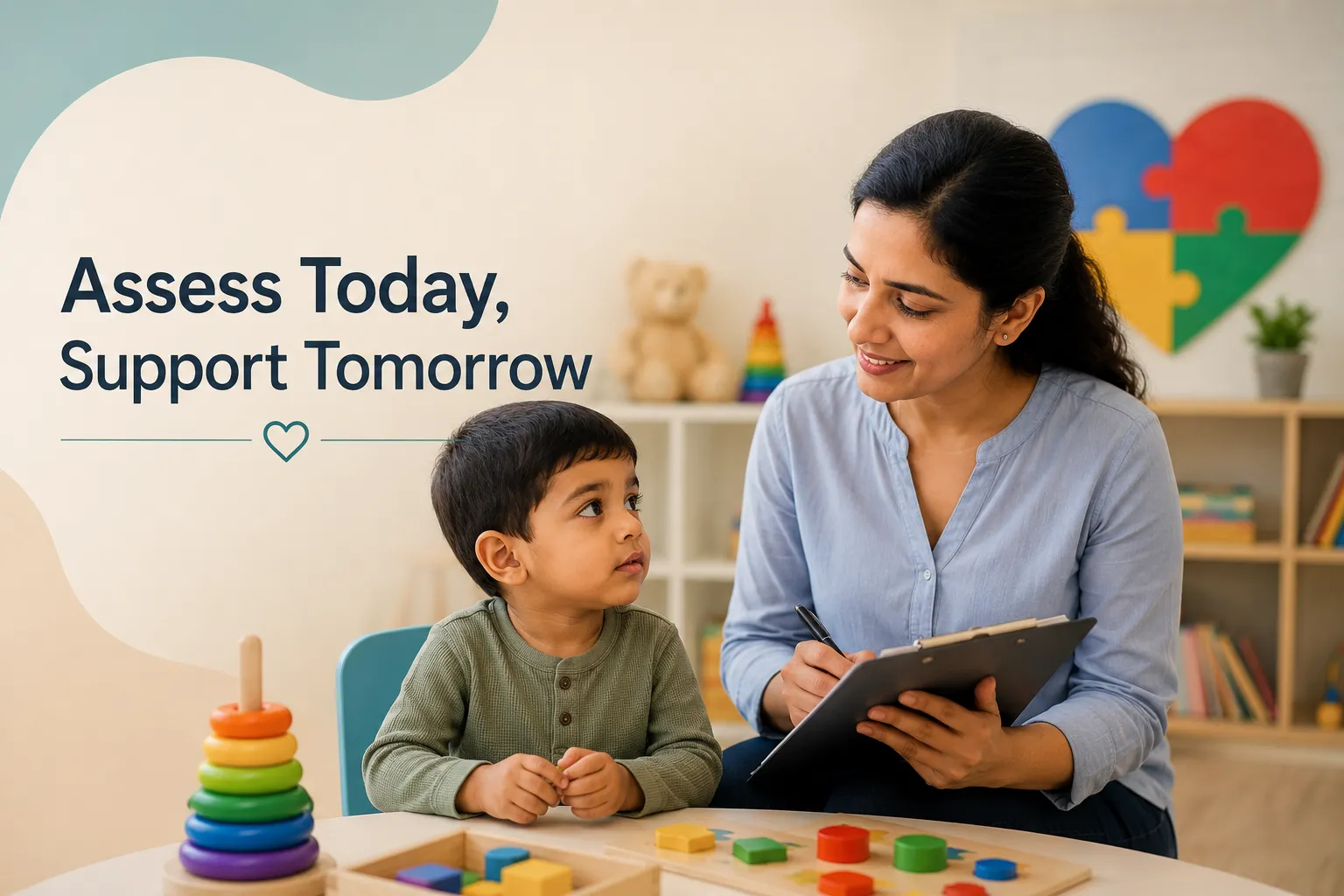
A speech and language therapist reviews history, hearing, play, understanding of language, spoken language, speech sounds and social communication. The therapist then explains the profile in plain language and sets priorities.
Therapy goals
Goals are practical and measurable. A younger child might aim to use 20 new words for daily needs or follow two-step directions. An older child might work on telling a story in order or answering "why" questions.
Therapy techniques
- Play-based therapy where the therapist models and expands the child's words during games
- Visual supports such as pictures and schedules to make language concrete
- Naturalistic teaching using everyday routines like snack time
- Parent coaching so that learning continues at home
- Augmentative communication for children who need a bridge while speech grows
Some children also need help with mouth movements for feeding and speech. This is covered by oral motor therapy.
How Parents Can Support Language Development at Home
- Talk about what you are doing during meals, bath time and walks
- Expand what your child says. If your child says "ball", you say "big ball" or "red ball"
- Pause and wait so that your child has time to respond
- Read together daily, pointing to pictures and naming them
- Limit background screens and make time for face-to-face play
- Give choices such as "milk or juice?" to invite a word
Growing Up with More Than One Language
Many Delhi families speak Hindi, English, Punjabi or another language at home. Learning two or more languages does not cause language delay. A bilingual child may mix languages or have a smaller vocabulary in each language but a similar total vocabulary to a single-language peer. Therapists assess both languages where possible, and families are usually advised to speak the language they are most fluent in, since that gives the child the richest input.
How to Choose a Language Development Therapy Centre in Delhi
- Qualified speech and language therapists who assess before planning
- Therapy that is play-based and matched to age and interests
- Coordination with occupational therapy and special education
- Parent training and written home programmes
- Regular review of progress with clear goals
- Honest advice about frequency, duration and cost. Our therapy cost guide explains what affects fees
Our checklist in the parents' checklist for choosing speech therapy in Delhi goes into more detail.
Speech and Language Therapy at AILC, South Extension
AILC offers speech therapy, early intervention, special education and occupational therapy in one centre at E-17, 2nd Floor, South Extension Part 1, New Delhi. Our team has worked with children with language delay, autism, ADHD, dyslexia and developmental delay for more than 30 years. We welcome families from South Delhi and across Delhi NCR, with most sessions in the centre and selected online consultations for added convenience.
If you are worried about your child's language, book a consultation or call +91 98100 52388.