Should You Wait a Little Longer or Get Your Child Assessed Now?
Every parent who has ever worried about their child's development has heard the two opposite pieces of advice at the same time. One relative says "don't rush into labels, every child develops differently." Another says "the earlier you check, the better, don't wait." Your paediatrician might lean one way, your mother in law the other, and somewhere in between is you, lying awake wondering who is actually right.
The honest answer is that both pieces of advice can be correct, just for different children. Some developmental differences genuinely resolve on their own with time. Others do not, and waiting only means your child loses months, sometimes years, of support during the exact window when intervention works best. The challenge is knowing which situation you are actually in.
Here is a clearer way to think through this decision, instead of relying on whoever spoke to you most recently.
When Guessing Isn't Working Anymore, Get an Actual Answer
If you have been going back and forth for weeks or months without any real clarity, that hesitation itself is worth paying attention to. A psychometric evaluation gives you an objective, professional read on where your child stands, replacing conflicting opinions with an actual answer. If the assessment points to a need for support, our early intervention programme is specifically designed to make the most of these early developmental years, when the brain responds fastest to the right kind of input.
If you would rather talk this through with someone before deciding anything, book a consultation and get a professional opinion on your specific situation.
What "Wait and Watch" Actually Means
Wait and watch is a legitimate approach, not a way of avoiding the problem, when it is used correctly. It generally means observing your child closely over a defined period, tracking specific skills, and reassessing at a set point rather than simply hoping things improve. Done properly, it involves a plan, not just an open ended hope.
The mistake most parents make is treating wait and watch as an indefinite state rather than a time bound decision. Watching for two or three months with a clear checklist in mind is very different from watching for a year without noticing that nothing has actually changed.
When Wait and Watch Genuinely Makes Sense
There are situations where waiting a little longer is reasonable, and pushing straight into an assessment might be premature.
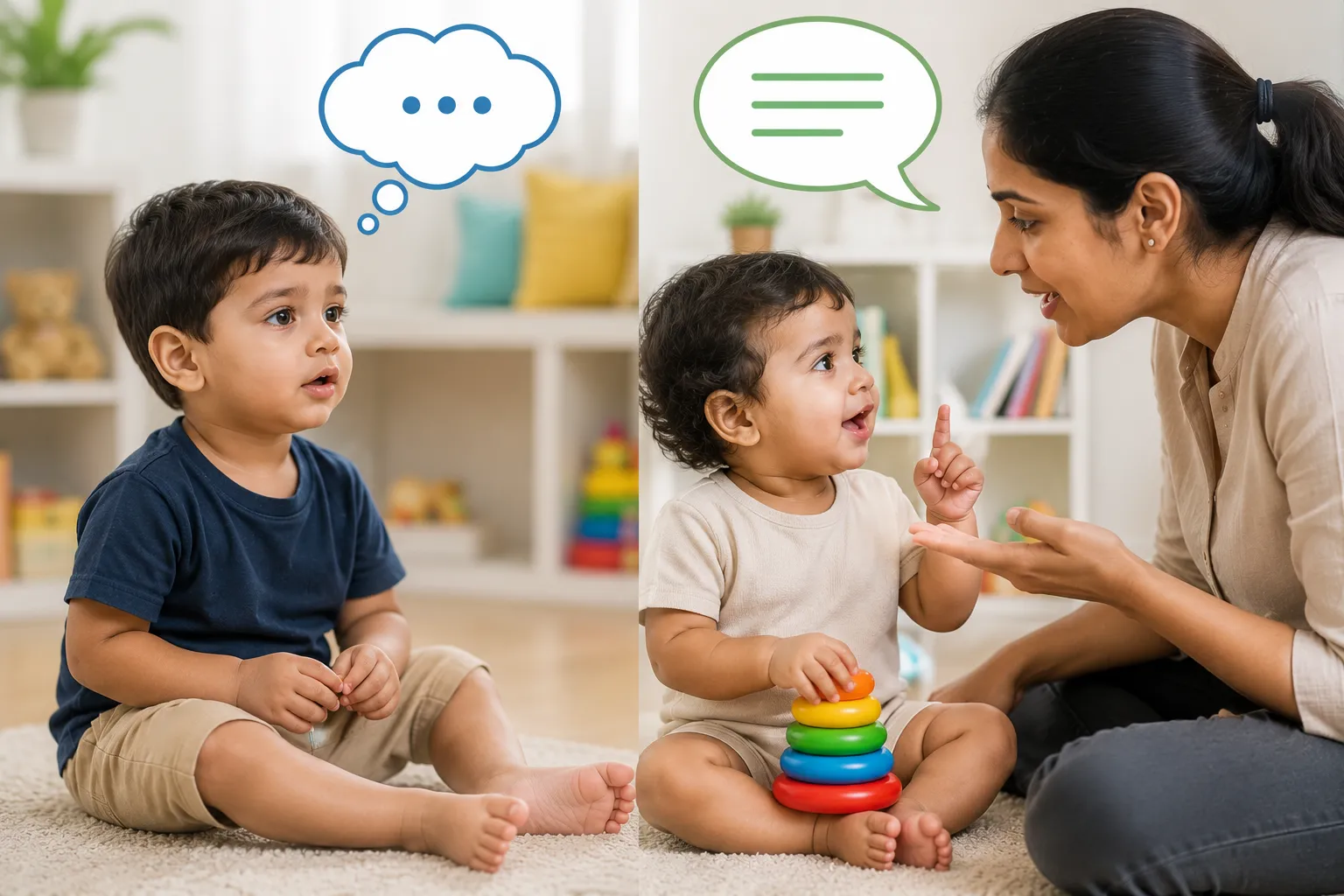
Your child understands everything said to them, follows instructions well, and interacts socially, but is simply a few months behind on spoken vocabulary alone. This pattern is common in late talkers who often catch up on their own.
Your child has one isolated area of slower development, such as fine motor skills, while everything else, including language, social interaction and cognitive skills, is progressing normally. Isolated, mild delays in a single area are less concerning than delays spread across multiple areas.
There has been a recent major life change, such as a house move, a new sibling, starting school, or a family disruption, and the change in behaviour or development coincides closely with that event rather than being a longstanding pattern.
Your child is meeting milestones, just consistently a little later than the average, without any regression, loss of skills, or additional red flags alongside the delay.
In these situations, giving it a defined window, generally two to three months, with specific goals to track, is a reasonable approach before deciding on next steps.
When You Should Stop Waiting and Get an Assessment
Certain signs shift the situation from "probably fine" to "worth checking properly," regardless of how convinced a relative is that everything will sort itself out.
Loss of skills your child previously had, such as words they used to say or social behaviours they used to show, is one of the clearest signals that waiting is not the right approach. Regression is never something to simply monitor.
Delays across multiple areas at once, such as speech combined with limited eye contact, reduced social interest, and repetitive behaviours, point to a broader developmental pattern rather than an isolated, catch up on its own delay.
A significant gap from age appropriate milestones, not just slightly behind but noticeably behind peers of the same age across more than one area, warrants a proper look rather than continued observation.
Consistent difficulty with everyday functioning, whether that is communication, frustration tolerance, sensory sensitivities, or social interaction, that is affecting daily life at home or school is a strong indicator that support would help now rather than later.
Your own persistent instinct that something feels different, even if you cannot fully explain why, deserves to be taken seriously. Parents are often the first to notice subtle patterns long before anyone else does, including doctors during a short routine visit.
If two or more of these apply, an assessment is almost always more useful than more waiting.
A Simple Framework to Decide
When you are stuck in the middle, ask yourself three questions.
First, is this delay isolated to one area, or spread across multiple areas such as speech, social interaction, behaviour, and motor skills together. Isolated delays lean toward wait and watch. Spread out delays lean toward assessment.
Second, has anything gotten better, worse, or stayed exactly the same over the last two to three months. Improvement supports continued watching. No change or decline supports moving to an assessment.
Third, is the delay affecting daily life, at home, at school, or in social settings, or is it mostly a milestone chart concern with no real world impact yet. Real world impact is a stronger signal to act sooner rather than later.
None of these questions alone gives you a definitive answer, but together they usually make the right direction much clearer than any single opinion from a well meaning relative.
Why Waiting Too Long Has a Real Cost
The early years are when a child's brain is forming connections at its fastest pace, which is exactly why early intervention tends to produce stronger, faster results than support started later. A child who begins therapy at age two or three often needs less intensive intervention over time than a child whose support begins at five or six, simply because the gap between them and their peers had more time to widen, and habits and coping patterns had more time to set in.
This does not mean older children cannot make excellent progress. They absolutely can, through speech therapy, occupational therapy or special education support tailored to their needs. It simply means that an earlier start generally makes that progress faster and less effortful, for both the child and the parent.
What Actually Happens During an Assessment
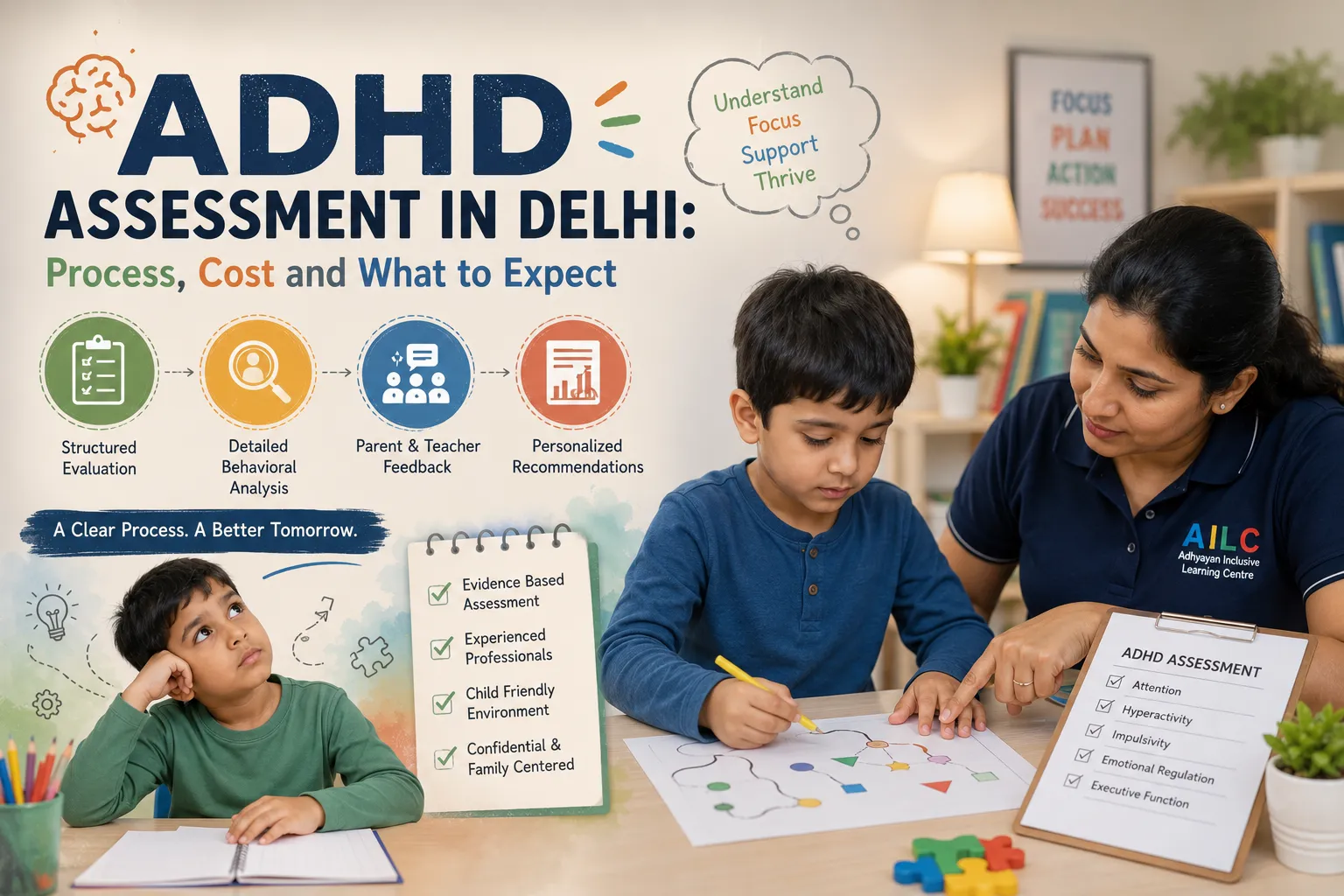
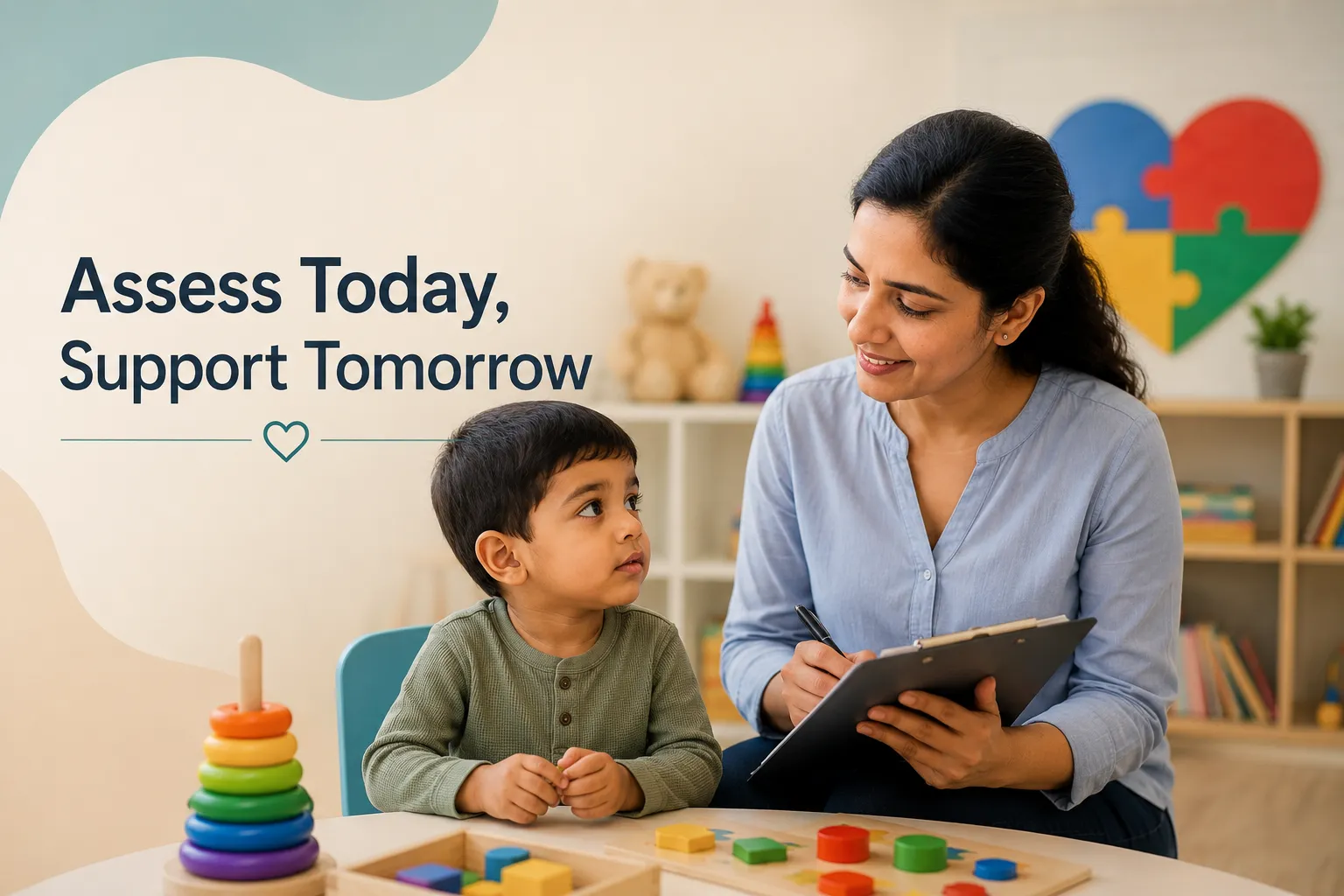
A big part of the hesitation around assessments comes from not knowing what to expect, which can make the process feel more intimidating than it actually is. A typical developmental assessment involves structured observation of your child, standardised tools appropriate to their age, a detailed conversation with you about developmental history and current concerns, and in most cases input across more than one area, such as language, motor skills, behaviour and social interaction, rather than a single narrow test.
At the end of it, you walk away with one of two outcomes. Either your child is developing within a typical range and you can stop second guessing yourself, or you get a clear picture of what support would help, and a specific plan instead of vague advice. Both outcomes are genuinely useful. Neither one is something to fear.
Handling the Emotional Side of This Decision
This decision rarely feels purely logical, even when you approach it with a checklist. Guilt about waiting too long, guilt about assessing too soon, family pressure in both directions, and your own fear of a possible diagnosis can all cloud a decision that, on paper, should be fairly straightforward. This is normal, and it does not mean you are handling it wrong.
If the emotional weight of this decision feels heavier than the decision itself, talking it through with a professional trained to support parents through exactly this kind of uncertainty can help. Our counselling programme works with parents directly, not just children, to help you think clearly instead of anxiously when facing decisions like this one.
Conclusion
If your child has one mild, isolated delay with no other concerns and nothing has gotten worse, a short, defined period of watching is a reasonable choice. If there are delays across multiple areas, any regression, a real impact on daily life, or a persistent gut feeling that will not go away, an assessment will almost always serve your child better than more time spent waiting.
When in doubt, remember that an assessment does not commit you to anything except information. It only tells you where your child stands, and from there, the decision about what to do next is still entirely yours to make with actual facts in hand.
If you have been sitting with this uncertainty for a while, book a consultation and get a professional opinion instead of another guess.