Late Talker vs Speech Delay: Understanding the Key Differences
One of the questions I hear most often from worried parents in the clinic is some version of the same thing. My child is two and barely talking, is this normal or should I be worried. It is such a common concern, and honestly, it is one of the hardest ones to answer with a simple yes or no, because the truth sits somewhere in between two very different possibilities, being a late talker and having an actual speech delay.
Over the years of sitting across from parents, watching children during evaluations, and following up months later to see how things unfolded, I have learned that this distinction matters far more than most people realize. Getting it right can mean the difference between reassuring a family that their child simply needs a little more time, and catching a genuine developmental concern early enough to make real intervention possible. Getting it wrong, in either direction, can either cause unnecessary panic or delay support a child actually needs. So let us slow down and really unpack what separates the two.
What Does It Mean to Be a Late Talker
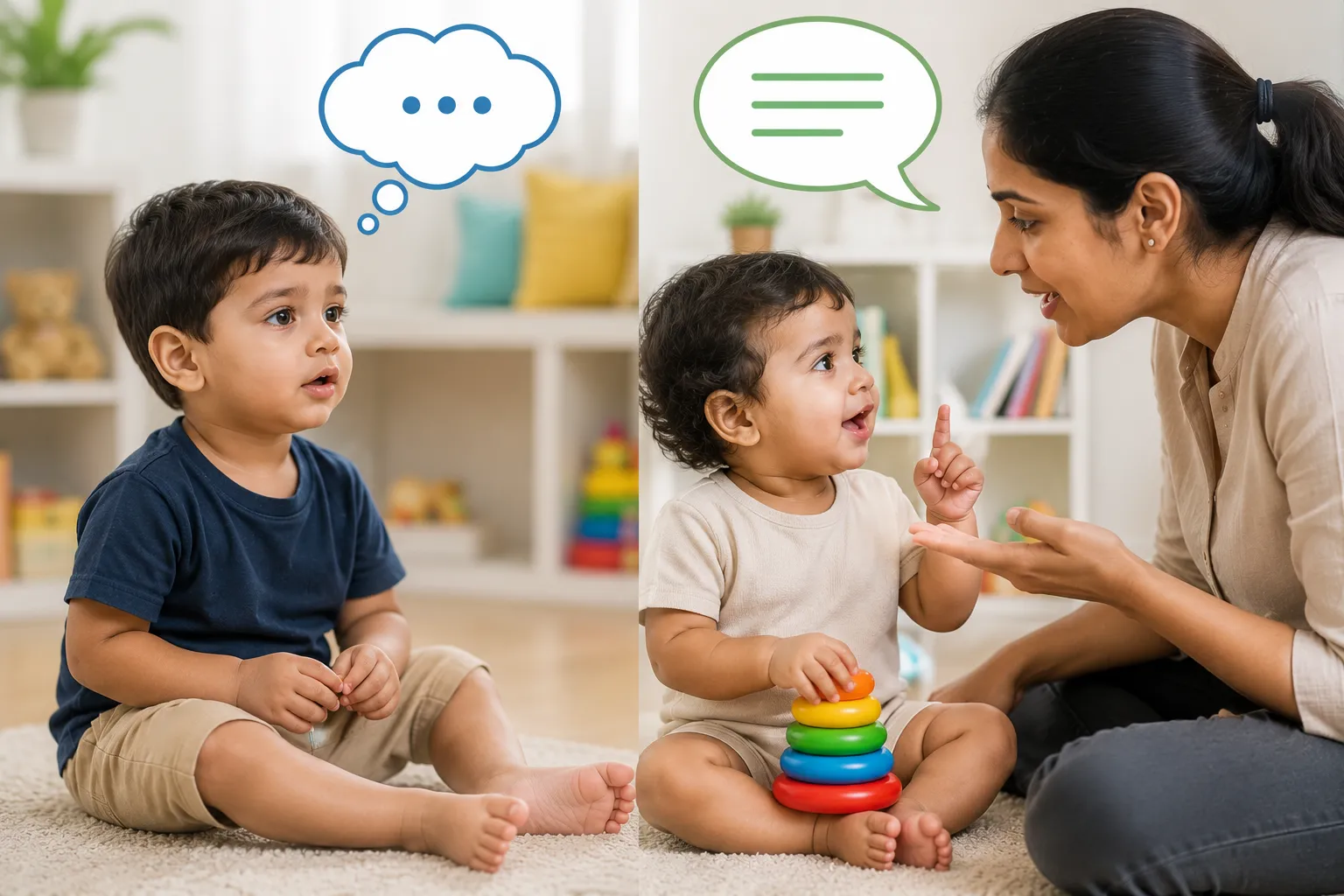
A late talker is a term used to describe toddlers, usually between eighteen and thirty months old, who have a smaller vocabulary than expected for their age but otherwise show typical development in every other area. These are children who understand language well, follow instructions, play appropriately, make eye contact, engage socially, and show no other red flags. Their only lagging skill is expressive vocabulary, meaning the actual words they can say out loud.
I remember one little boy I evaluated a few years back who, at twenty two months, had maybe ten words. His parents were understandably anxious, having compared him constantly to a cousin the same age who was already forming short sentences. But when we looked closer, this boy understood everything said to him, pointed at pictures correctly when asked, played pretend games with his toys, laughed at the right moments during stories, and engaged beautifully with his parents through gestures and sounds. He was, by every meaningful measure, a classic late talker. Many children like him catch up entirely on their own by age three, sometimes with a little extra encouragement at home, sometimes without any intervention at all.
What Speech Delay Actually Looks Like
Speech delay, on the other hand, tends to involve broader difficulties, and this is where things become more clinically significant. A child with a genuine speech delay often struggles not just with the number of words they say, but with understanding language, following simple directions, engaging socially, or using gestures like pointing and waving. Sometimes there are additional concerns present too, like unusual play patterns, limited eye contact, or a lack of interest in interacting with others.
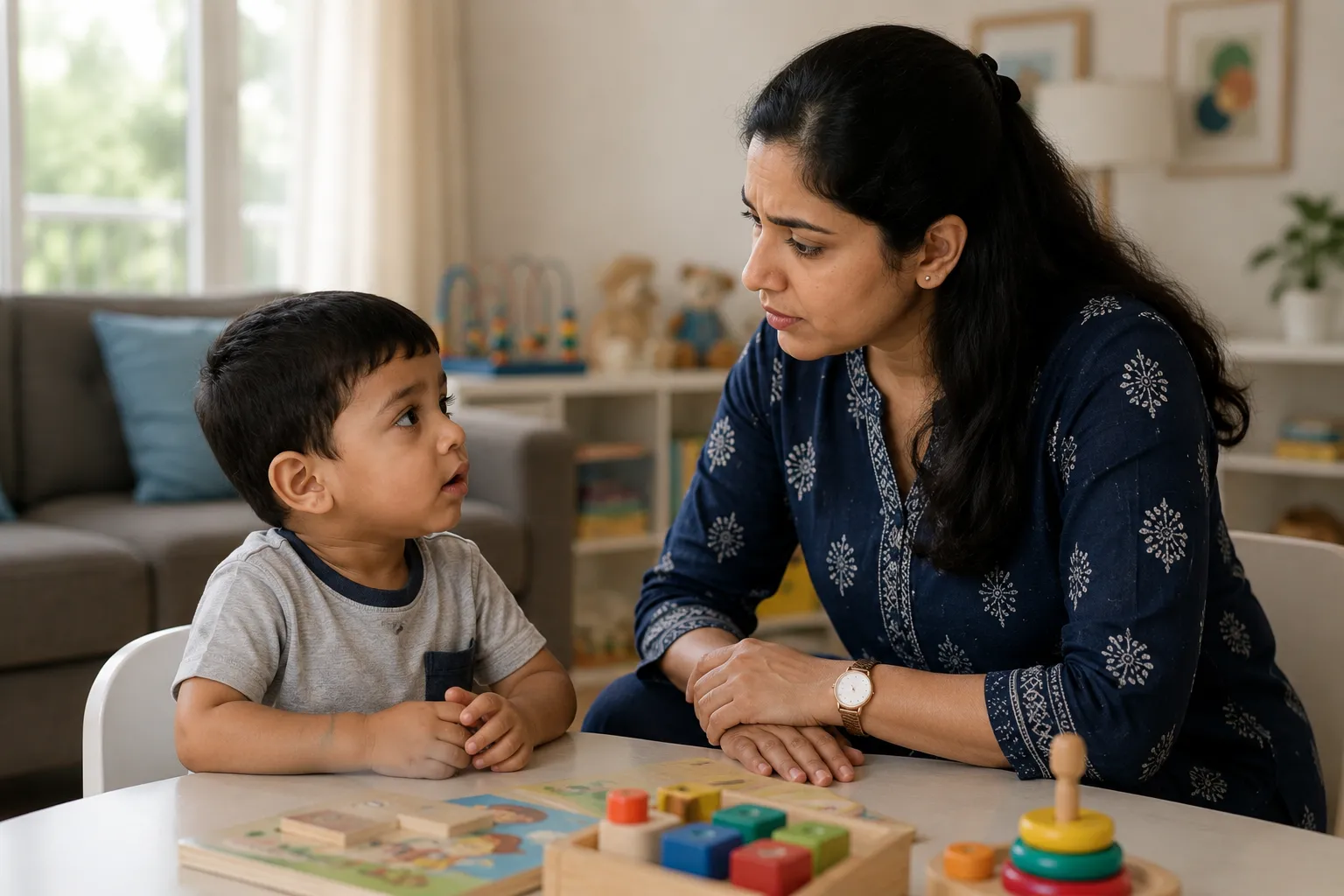
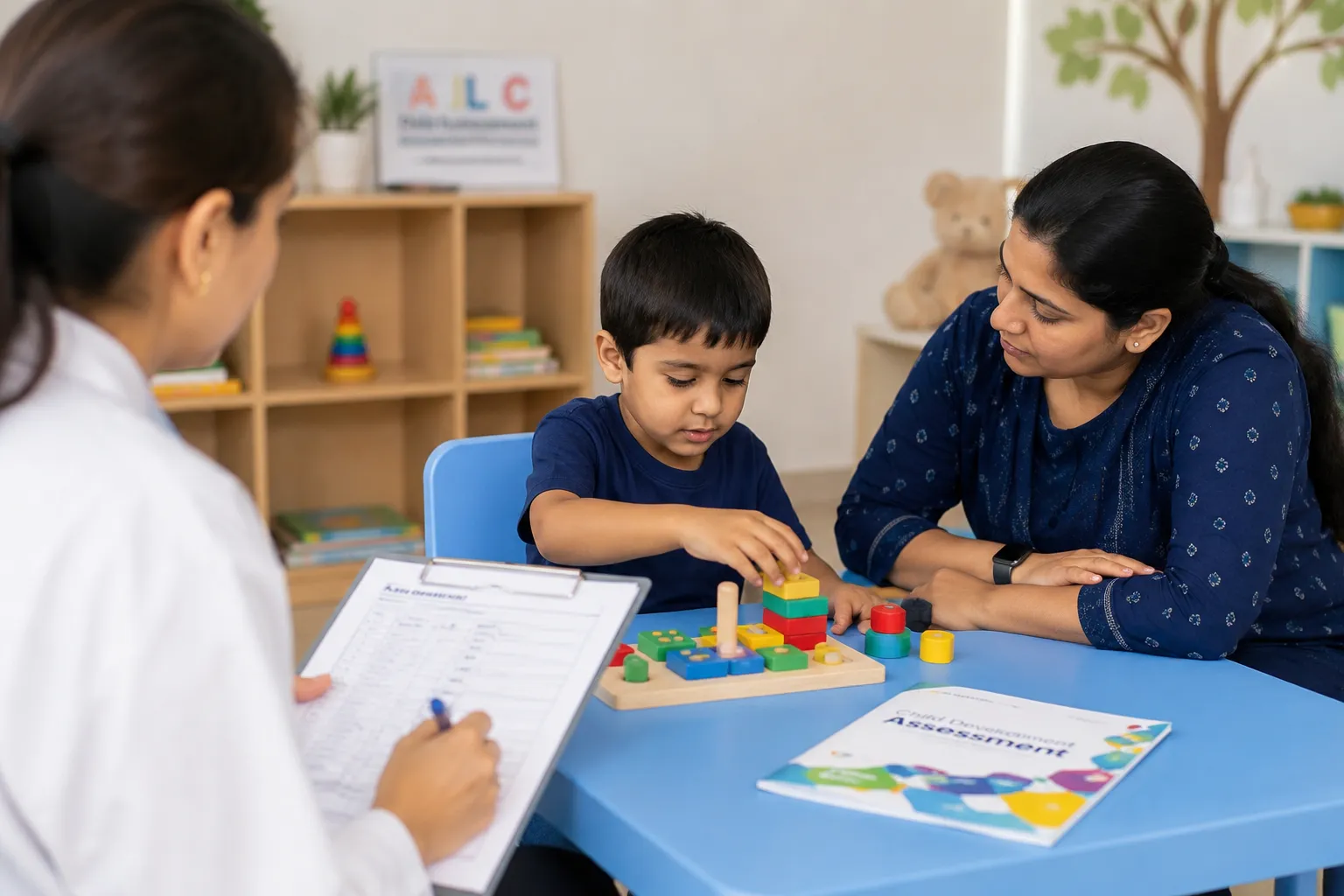
I think of another child I worked with, a little girl close to the same age as the boy I mentioned earlier, who also had very few words. But unlike him, she struggled to follow even basic instructions, rarely pointed to show interest in things, and did not seem to engage much with the back and forth of simple games like peekaboo. In her case, the limited vocabulary was just one piece of a larger picture, and it turned out she needed a full developmental workup, not just speech support. This is exactly the kind of situation where a proper evaluation makes all the difference, because on the surface, both children looked similar. Neither was talking much. But underneath, their developmental profiles were quite different.
Why This Distinction Actually Matters
I know it might sound like splitting hairs, but this difference genuinely shapes how a family should move forward. A late talker often benefits from simple strategies at home, narrating daily activities, reading together frequently, expanding on the words a child already uses, and giving them plenty of opportunities to communicate without immediately anticipating their needs. Many of these children close the gap naturally within months.
A child with a broader speech delay, especially one accompanied by difficulties in understanding, social engagement, or play, usually needs more structured, professional support. This is where working with a qualified team through Speech Therapy becomes so valuable, since therapists are trained to look beyond just vocabulary counts and assess the full picture of a child's communication development.
The Overlap That Confuses Most Parents
Here is the tricky part, and honestly the part I try to explain most carefully to parents. In the early stages, a late talker and a child with a genuine speech delay can look almost identical on the surface. Both might have limited spoken vocabulary at eighteen months. Both might frustrate easily when they cannot get their point across. This overlap is exactly why parents should never rely purely on comparisons with other children, or even well meaning advice from relatives insisting a child will simply grow out of it.
What actually separates the two groups becomes clearer through a proper developmental assessment, looking at receptive language, social communication, play skills, and overall developmental milestones together, not vocabulary size in isolation. This is also why I always encourage parents not to wait excessively long before getting an opinion, even if it turns out to be nothing more than reassurance.
Why Timing Makes Such a Big Difference
I cannot stress this enough after years of clinical experience. The earlier a genuine concern is identified, the more effectively it can be addressed. This is the entire philosophy behind Early Intervention, catching developmental gaps during the years when the brain is most adaptable and responsive to targeted support. Waiting until a child enters preschool, when peer comparisons become unavoidable and academic demands increase, often means missing out on some of the most effective years for building foundational communication skills.
I have seen this play out clearly in practice. Children who start therapy around age two, when a genuine delay is identified early, tend to progress noticeably faster and often need less intensive support overall compared to children whose concerns are not addressed until age four or five. It is not that older children cannot make progress, they absolutely can, but earlier support tends to require less catching up later on.
What Parents Can Actually Do
If you are reading this because you are worried about your own child, here is what I typically recommend as a starting point. First, track what your child understands, not just what they say. Do they follow simple instructions without gestures. Do they respond to their name. Do they point to show interest. This receptive side of language often tells us more than expressive vocabulary alone.
Second, resist the urge to compare too heavily with siblings or peers, since language development genuinely varies quite a bit among typically developing children too. Third, and this is the one I feel most strongly about, do not wait if something feels off to you as a parent. Parental instinct, in my experience, is remarkably accurate more often than people give it credit for.
If you are in Delhi and searching for guidance, working with an experienced team offering Speech Therapy for Kids can provide clarity fairly quickly through proper evaluation, without unnecessary alarm or unnecessary delay either. Many families I have worked with describe a huge sense of relief just from getting a clear answer, whether that answer is wait and watch a little longer, or let us begin therapy now.
Finding the Right Support
Choosing where to go for evaluation and therapy matters quite a bit too. Look for a team with genuine pediatric speech and language expertise, not a general practice that occasionally sees children. Ask how they differentiate late talkers from children needing more comprehensive support, since a thoughtful evaluation process usually reflects deeper clinical experience. Families searching for the Best Speech Therapist in Delhi often find that experienced clinicians take the time to explain not just what they observe, but why it matters, which honestly makes the whole process feel far less overwhelming for parents.
What Parents Should Remember
If there is one thing years of working with families has taught me, it is this. Almost every parent who walks in worried about their child's speech is already doing the right thing by paying attention and seeking answers. Whether your child turns out to be a late talker who catches up beautifully on their own, or a child who needs more structured support, getting clarity early gives you peace of mind either way, and gives your child the best possible start. Trust your instincts, ask for a proper evaluation, and remember that seeking help early is never something to feel guilty about. It is, in my experience, one of the most powerful things a parent can do.