Best Occupational Therapy Centre in Delhi: What to Look For
A teacher mentions that your child avoids holding a pencil. In the same week, a paediatrician uses the phrase "sensory difficulties" and suggests occupational therapy. The next step for many parents is a search for the best occupational therapy centre in Delhi, without knowing what separates one clinic from another.
This guide explains what children's occupational therapy involves, which signs justify an assessment, what to check before you choose a centre, and how therapy works at Adhyayan Inclusive Learning Centre (AILC) in South Extension Part 1. It is written for parents who have received a recommendation and want to act on it with confidence.
Demand for this kind of support is rising. About 1 in 31 eight-year-olds in the US were identified with autism in the CDC's latest surveillance data, up from 1 in 36 in the previous report. Advocates link the increase to better awareness, screening and diagnosis, which also means more families are hearing early that their child may need therapy. These figures are from the US, but the pattern of earlier identification is relevant to families here.
What Occupational Therapy Does for Children
For a child, an "occupation" is anything that fills their day: playing, eating, dressing, drawing, sitting in class, joining a group. Occupational therapy (OT) looks at what makes these activities hard and builds skills step by step through structured play and practice.
An occupational therapist may work on:
- Fine motor control for handwriting, cutting and buttoning
- Balance, posture and body coordination
- How the child responds to sound, touch, movement and textures
- Attention, planning and finishing tasks
- Independence in routines such as dressing, feeding and toileting
The aim is practical. A child who can do more of what the day asks of them, with less distress, is a child who joins in more at school and at home.
Signs Your Child May Need an OT Assessment
Children develop at different speeds, so one sign on its own is rarely a concern. A cluster of signs, or signs that interfere with school and home life, is a good reason to book an assessment. Common ones include:
- Difficulty gripping a pencil, using scissors, or fastening buttons and zips
- Strong reactions to everyday sounds, clothing tags, food textures or crowded places
- Frequent tripping, poor balance, or avoiding playground equipment
- Trouble sitting through a task, following a routine, or moving between activities
- Delays in feeding, dressing or toileting compared with children of the same age
- Meltdowns that follow predictable triggers such as noise, transitions or textures
An assessment does not commit you to therapy. It tells you what is happening and whether OT is the right support. Our guide on whether your child needs paediatric occupational therapy in Delhi covers this in more detail.
How to Choose the Best Occupational Therapy Centre in Delhi
Clinic websites tend to look alike, so check specific things before you book:
- Qualified paediatric occupational therapists, and a clear answer about who will treat your child
- A structured assessment before therapy starts, with written goals you can review
- Sessions built around play and real-life tasks, not only repeated exercises
- Regular progress reviews and a plan for what parents can practise at home
- Speech therapists, special educators and psychologists on site, so goals stay consistent across therapies
- A sensory-friendly space and session timings that suit your child's age and school day
- Clear information on fees and session frequency before you commit
Visit in person if you can. Watch how the therapist speaks to your child, and notice whether your questions get specific answers. Our post on how to choose the right occupational therapist offers a longer checklist.
How Occupational Therapy Works at AILC
AILC is at E-17, 2nd Floor, South Extension Part 1, New Delhi. Our occupational therapists work alongside special educators, speech therapists, behaviour therapists and counselling psychologists, so a child's plan can draw on more than one discipline when needed. A typical journey looks like this:
- Parent interview. We ask about birth history, milestones, school and home routines, and what worries you most.
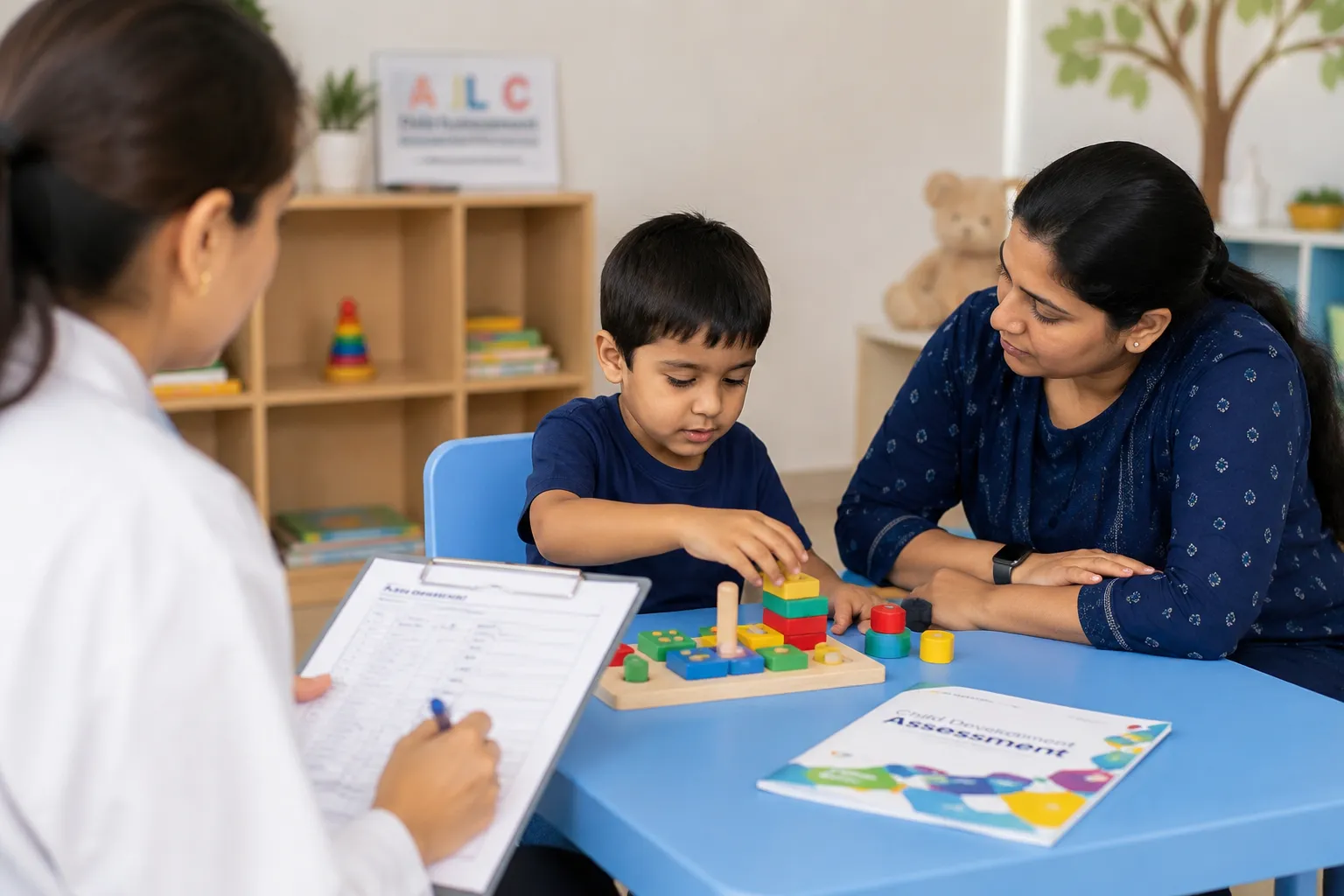
- Observation and assessment. The therapist watches your child in structured tasks and free play to understand motor, sensory and attention patterns.
- Goal setting. We agree on two or three priorities with you, such as holding a pencil comfortably or coping in a noisy classroom.
- Therapy sessions. Play-based activities are matched to those goals, and the therapist adjusts the difficulty as your child improves.
- Home practice and review. You receive short activities to repeat at home, and we review progress at regular intervals and update the goals.
What therapy can look like: an illustrative example
This is a composite example that shows how therapy typically unfolds. It does not describe a specific child.
Consider a six-year-old who avoids drawing, grips a pencil with a closed fist, and becomes upset when a shirt tag touches their neck. Their teacher notes that written work is rarely finished. At the assessment, the therapist observes low hand strength and a strong response to touch. With the parents, she sets two goals: a comfortable pencil grip and calmer mornings while getting dressed.
Early sessions use play such as pushing weighted boxes and working with dough to build hand strength and settle the body. Pencil tasks are introduced gradually, starting with thick crayons. The parents practise short dough and dressing routines at home. At each review, the therapist checks progress against the two goals and adjusts the activities. The aim over the following months is that writing feels less tiring and mornings feel less stressful.
Conditions Our Occupational Therapists Support
OT is used for a wide range of needs. At AILC, families most often come to us for:
- Autism. Therapy focuses on play, daily routines and sensory regulation. See our page on occupational therapy for autism.
- ADHD. Work centres on attention, planning and self-regulation in daily tasks.
- Sensory processing difficulties. Read about our sensory occupational therapy in Delhi.
- Handwriting and fine motor challenges. These often show up first in the classroom.
- Dyslexia and other learning disabilities. OT supports the motor and sensory side of learning.
- Developmental delays. Earlier support tends to give children more time to build skills. See our early intervention programme.
If your child is school-aged and you are looking for general support, our page for an occupational therapist for children is a good starting point. You can also read about our full occupational therapy services.
When OT Works Best Alongside Other Therapies
Many children need more than one kind of support. A child with delayed speech who also avoids certain textures, for example, may see a speech therapist and an occupational therapist. When both sit under one roof, the therapists can compare notes and keep goals aligned instead of working separately.
If you are unsure how the two therapies differ, read our post on the difference between speech therapy and occupational therapy. Students and parents researching OT as a career can see our guide to the Best Occupational Therapy School in NCR for Students.
Ready to book an occupational therapy assessment?
Speak to the AILC team in South Extension and find out what your child needs.
Book a Consultation | Call +91 98100 52388