Parents often sense that something is different long before anyone says the word autism. Your toddler may not respond to their name, may play with the wheels of a toy car instead of driving it, or may have stopped using words they once said. Knowing the early signs of autism in toddlers helps you decide when to ask for an assessment, because earlier support often makes daily life easier for both child and family.
This guide explains the early signs of autism by age, which behaviours are typical for toddlers, what screening and assessment involve, and what to do next. It is meant to help you notice and act, not to diagnose your child. Only a qualified professional can diagnose autism.
What Is Autism?
Autism spectrum disorder (ASD) is a neurodevelopmental condition that affects how a person communicates, interacts with others and experiences the world. It is called a spectrum because children differ widely. Some speak fluently but struggle with social interaction, while others need support with most daily activities. Signs usually appear in the first two to three years of life, though they can look different from child to child.
Early Signs of Autism by Age
6 to 12 months
- Rarely smiles back or shows joy in response to others
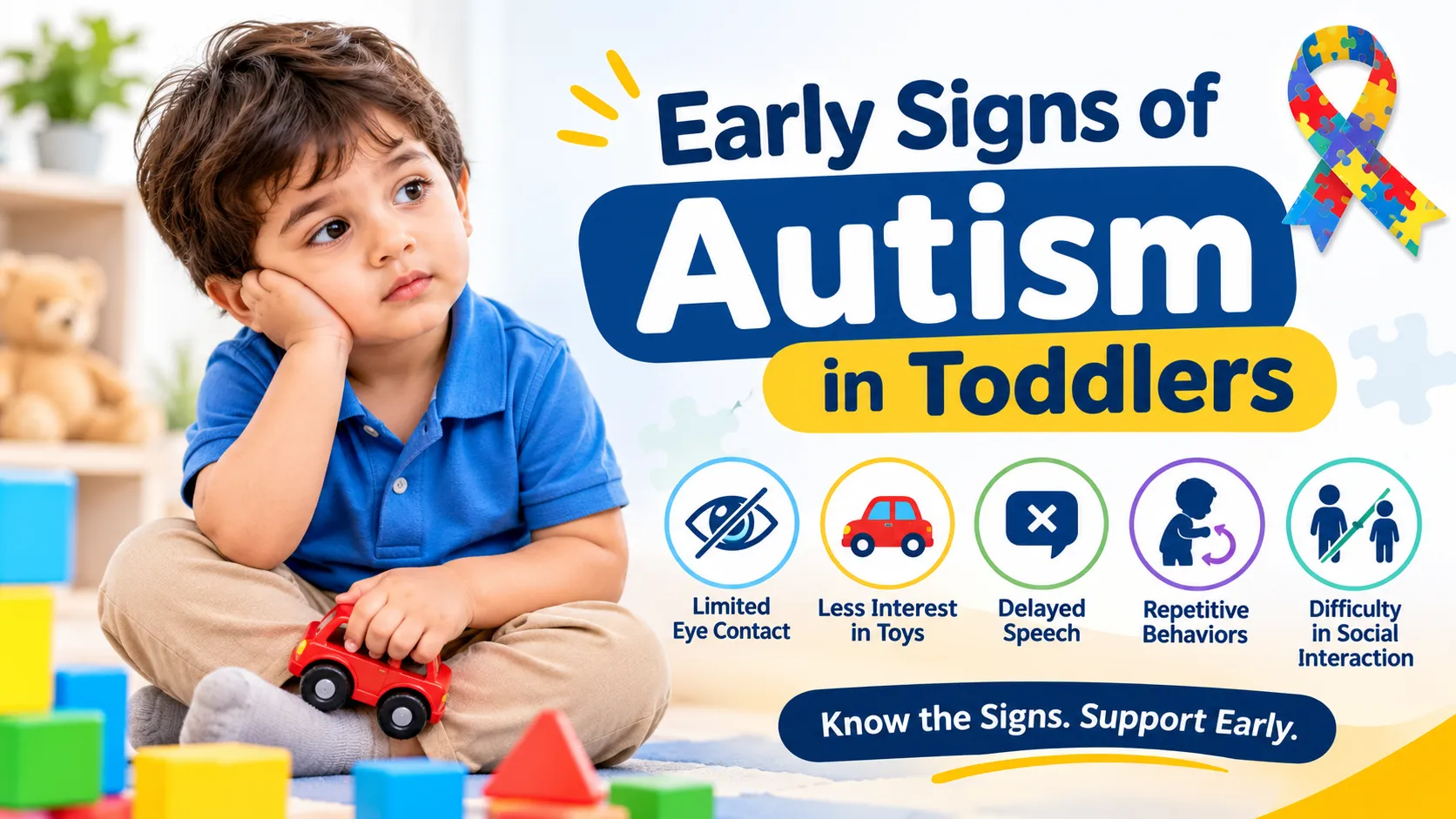
- Limited eye contact, or looks away when you try to engage
- Does not respond consistently to their name by around 9 to 12 months
- Little or no babbling, or does not copy sounds and facial expressions
- Does not use gestures such as reaching up to be picked up or waving
12 to 18 months
- Does not point to show you something or to ask for it
- Does not look where you point or follow your gaze
- Few or no words by 16 months
- Prefers to play alone and does not share enjoyment with you
- Lines up toys or objects, or focuses on one part of a toy, such as a wheel
18 to 24 months
- No pretend play, such as feeding a doll or talking on a toy phone
- No two-word phrases by around two years
- Repeats words or phrases without using them to communicate
- Hand flapping, rocking, spinning or toe walking that happens often
- Strong distress with small changes in routine
- Loss of words, babbling or social skills the child once had
2 to 3 years
- Limited interest in other children, or difficulty taking turns and joining play
- Speech that is hard to understand or mostly repeated phrases
- Strong reactions to sounds, textures, lights or smells, or seeming not to notice pain
- Very intense interest in particular topics or objects
- Frequent meltdowns that are hard to soothe
- Very picky eating based on texture or appearance
Our guide to hand flapping in children with autism explains this common behaviour in more detail.
Signs That Need Prompt Attention
Do not wait if you notice any of the following:
- Any loss of speech, babbling or social skills
- No babbling or pointing by 12 months
- No words by 16 months or no two-word phrases by 24 months
- No response to their name and no response to sounds, which also calls for a hearing check
- Seizures or sudden changes in behaviour, which need urgent medical advice
Is It Autism or a Speech Delay?
Many toddlers who talk late do not have autism. A child with a pure speech delay usually communicates in other ways: they point, use gestures, make eye contact, play with others and try to share their interests. A child with autism often shows differences in social communication as well, such as limited pointing, less back-and-forth interaction and unusual play. Our guides to toddler speech delay signs and late talker versus speech delay can help you tell the difference, but only an assessment can say for sure.
Autism Signs in Girls and Children Who Talk Well
Autism is sometimes missed in girls and in children with strong language. Girls may copy peers, hide difficulties or show quieter signs, and a child who speaks in full sentences can still struggle with conversation, friendships and flexibility. If your child seems to be working very hard to keep up socially, or is exhausted or distressed after school or play dates, it is worth discussing with a professional even if they talk well.
Why You Should Not "Wait and See"
It is tempting to wait, especially when family members say "he will talk when he is ready". But waiting costs valuable time during a period of very rapid brain development. If an assessment finds that your child does not have autism, you will have lost nothing. If it does, support can begin early. Read more in our guide to wait and watch versus assessment.
Screening and Assessment: What to Expect
Screening
Paediatricians often use a short parent questionnaire to screen for autism, commonly around 18 and 24 months, in line with international paediatric guidance. A screening result is not a diagnosis. It only tells you whether a fuller assessment is advised.
Assessment
A full assessment is done by qualified professionals such as a developmental paediatrician, child psychiatrist or clinical psychologist, often with input from speech and occupational therapists. It usually includes a detailed parent interview, observation of your child at play, standardised tools and a review of hearing, development and health. Our guide to autism assessment in Delhi explains each step.
Results and next steps
You should receive a clear explanation, a written report and a plan. Whatever the result, a good team will tell you your child's strengths as well as areas of need.
What to Do If You Notice These Signs
- Write down what you see. Note examples, when they happen and how often
- Record short videos of behaviour that concerns you, since toddlers often behave differently in a clinic
- Arrange a hearing test, because hearing problems can look like autism
- Book an assessment with a qualified team rather than relying on online tests alone
- Begin support while you wait. Speech therapy, occupational therapy and parent coaching can start before a formal diagnosis
How to Support Your Toddler at Home
- Get down to your child's level and follow their interests
- Name what your child is doing and looking at
- Pause and wait for a response, even a look or gesture
- Use simple words and gestures together
- Keep routines predictable and give a warning before changes
- Protect quiet time if your child is overwhelmed by noise or crowds
Common Worries Parents Share
"Did I cause this?"
No. Autism is not caused by parenting, screen time or anything a parent did or did not do. Research points to a mix of genetic and early developmental factors. Guilt is common, but it does not help your child, and you can put that energy into support instead.
"Will my child ever speak?"
Outcomes vary. Many autistic children develop speech with early support, and children who speak little can still communicate through gestures, pictures or devices. A speech therapist can set realistic, practical goals once your child has been assessed.
"Is it too early to ask?"
It is never too early to ask a question. A short consultation can tell you whether your child's development looks on track or whether further assessment is worthwhile.
Early Support Makes a Difference
Early intervention builds communication, play and daily living skills while the brain is highly adaptable. It also gives parents practical tools and confidence. Our early intervention programme works with toddlers and their families, and our overview of autism treatment in Delhi explains the therapies we offer.
Autism Assessment and Early Support at AILC, South Extension
Adhyayan Inclusive Learning Centre has worked with autistic children and their families for more than 30 years. Our multidisciplinary team offers assessment, early intervention, speech therapy, occupational therapy, behaviour support and special education at E-17, 2nd Floor, South Extension Part 1, New Delhi 110049. Families can read reviews and find directions on Google Maps before visiting.
If you are worried about your toddler's development, book a consultation or call +91 98100 52388.