When parents type occupational therapy near me into a search box, they usually have a specific worry: a child who struggles to hold a pencil, avoids certain textures, falls often, melts down at transitions or cannot manage buttons and shoelaces. The search results show many clinics, and it is hard to tell which one will actually suit your child.
This question-and-answer guide covers what parents in Delhi ask most often: what occupational therapy (OT) is, who needs it, where to look, what to ask before booking, how much to expect to pay and how to tell whether therapy is working. If you are in South Delhi, you can see how to reach AILC and read parent reviews on Google Maps.
What Is Paediatric Occupational Therapy?
Occupational therapy helps children take part in everyday activities, which for a child means playing, learning, eating, dressing, writing and getting along with others. A paediatric occupational therapist looks at the skills behind those activities: fine motor control, body coordination, sensory processing, attention, planning and self-care.
The word "occupation" confuses many parents. It does not mean a job. It means the "jobs" of childhood. For a toddler this is play and feeding. For a school-age child it is learning and handwriting. For a teenager it includes self-care, organisation and preparing for independence.
Who Needs Occupational Therapy?
Parents often ask whether OT is only for children with a diagnosis. It is not. A child may benefit from OT if they:
- Have messy or tiring handwriting, or avoid colouring and drawing
- Struggle with buttons, zips, scissors or using cutlery for their age
- Are very sensitive to sound, touch, clothing tags, food textures or crowds
- Seek constant movement, crash into things or seem unaware of their strength
- Are clumsy, trip often or find ball games and cycling very hard
- Have difficulty with attention, routines or handling changes
- Have a diagnosis such as autism, ADHD, developmental coordination disorder or global developmental delay
Our guide to paediatric occupational therapy in Delhi goes deeper into these signs.
Where Can I Find an Occupational Therapist in Delhi?
Parents in Delhi usually find occupational therapy in four kinds of places. Each has strengths and limits.
Hospitals and government institutions
Large hospitals and institutes have rehabilitation departments and experienced therapists. They are often best for children with complex medical needs, though waiting times can be long and sessions may be shorter or shared.
Private multidisciplinary centres
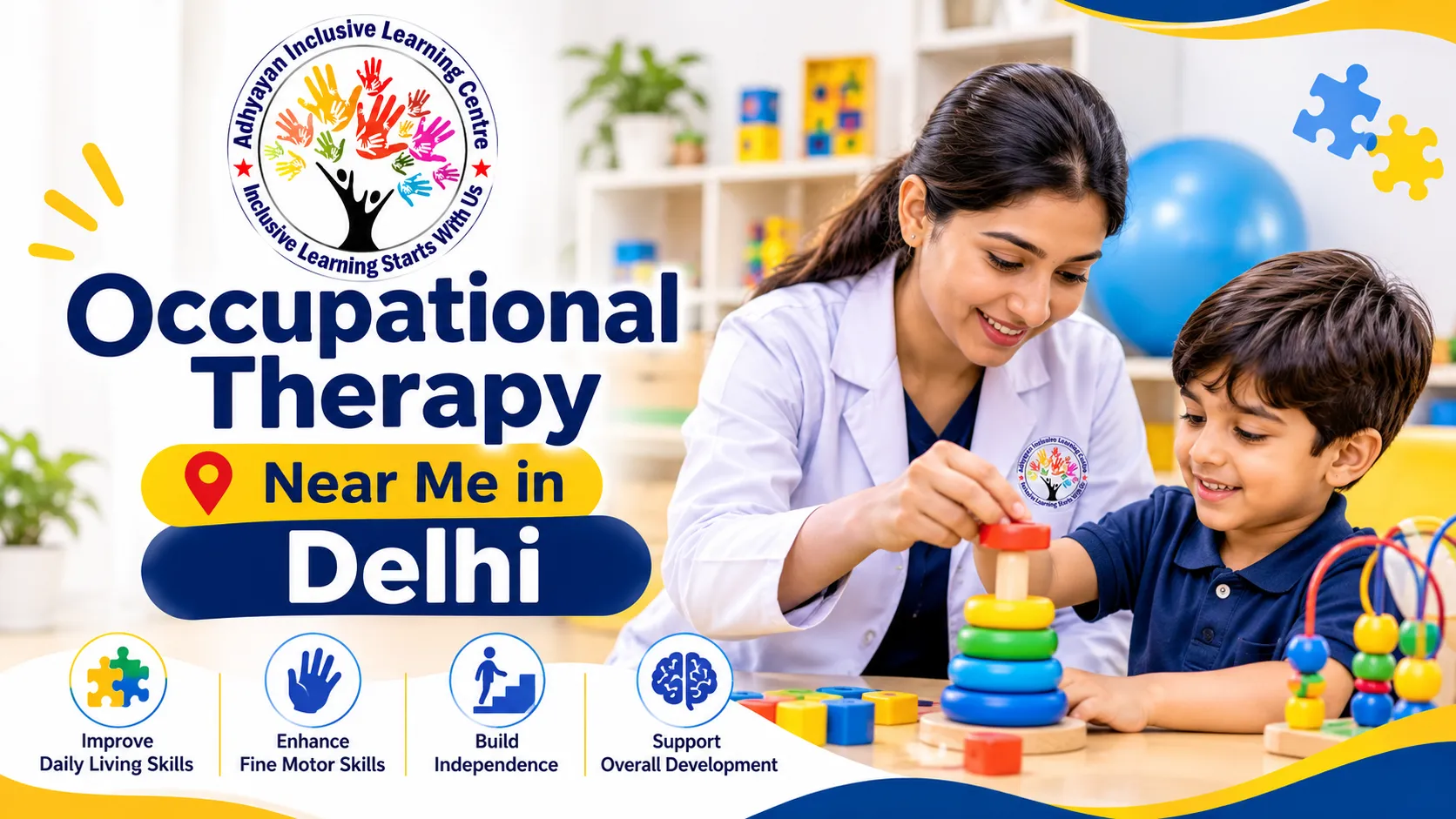
Centres like AILC bring occupational therapy together with speech therapy, special education and psychology. This is helpful when a child has overlapping needs, since the team can set shared goals. Read more about the occupational therapy service at AILC.
Independent therapists and small clinics
Some therapists work privately from clinics or visit homes. This can offer flexibility and one-to-one attention, but check that the therapist is qualified and that there is a plan for communication with your child's school and other professionals.
Online and hybrid options
Some parent coaching and review sessions work well online, but occupational therapy usually needs hands-on, in-person work with equipment, so most children do best with in-person sessions at least at the start.
Our article on choosing the best occupational therapy centre in Delhi compares these options in more detail.
What Qualifications Should an Occupational Therapist Have?
In India, occupational therapists complete a bachelor's degree in occupational therapy, and many hold a master's degree with paediatric specialisation. Registration with a recognised professional council and training in sensory integration are also commonly sought by parents. Do not be shy about asking: "What are your qualifications, how long have you worked with children my child's age, and what additional training do you have?" A good therapist will welcome these questions. See our guide on how to choose the right occupational therapist.
What Happens in the First Visit?
- Parent interview. The therapist asks about birth, development, health, sleep, feeding, play, school and your main worries
- Observation. The therapist watches your child play, move and use their hands, often using toys, puzzles and swings
- Standardised or structured assessment. Depending on age, tests of fine motor skills, coordination, visual motor skills or sensory processing may be used
- Feedback and plan. You should leave with plain-language findings, goals, a recommended number of sessions and home activities
What Do OT Sessions Look Like?
Sessions are usually play-based and last 30 to 45 minutes. A child might swing or climb to wake up or calm the body, work on a fine motor game, practise dressing or feeding, and finish with a calming activity. If the main concern is sensory processing, the therapist may use a structured approach such as sensory occupational therapy. For autistic children, the programme often includes routines, communication supports and regulation strategies. See occupational therapy for autism.
How Long Does Occupational Therapy Take?
There is no standard answer. Some children with a single concern, such as pencil grip, make progress in a few months. Children with broader needs may attend for a year or longer, with sessions tapering as skills improve. Ask the therapist to set goals for the first three months and to review progress with you in plain terms. Be cautious about any promise that therapy will "fix" a child by a fixed date.
How Much Does Occupational Therapy Cost in Delhi?
Fees vary by the therapist's experience, the type of centre, location, session length and whether the session is individual or group-based. Assessment fees are often different from regular session fees. Always ask for the cost of the assessment, the cost per session, any package pricing and cancellation rules before you book. Our guide on speech therapy and occupational therapy fees in Delhi explains what affects pricing.
Questions to Ask Before You Book
- Who will treat my child, and what are their qualifications?
- Will my child be assessed before a plan is set?
- Are sessions one-to-one, and how long are they?
- Will I receive written goals and progress reviews?
- How will I be involved and trained to help at home?
- Can the centre coordinate with my child's school, speech therapist and doctor?
- What happens if my child resists coming? How do you handle it?
How Will I Know OT Is Working?
Look for changes in daily life, not only in the therapy room: easier mornings, fewer meltdowns at the shoe rack, longer and neater writing, trying a new food, joining play at school. Ask your therapist to share short videos or simple checklists so that you can see progress yourself.
Simple Activities to Try at Home While You Wait for an Appointment
- For hand strength: squeezing playdough, tearing paper, pegging clothes on a line and using tongs to pick up small toys
- For coordination: animal walks, obstacle courses with cushions, throwing and catching a soft ball
- For self-care: practising buttons on a large shirt, zipping a jacket and pouring water from a small jug
- For sensory needs: heavy work such as carrying a laundry basket, pushing a box or wall push-ups, which many children find calming
These ideas support, but do not replace, an assessment. If a difficulty persists for more than a few weeks, book a consultation.
Occupational Therapy and Speech Therapy: Do I Need Both?
Many children benefit from both, since sensory regulation and communication develop together. Our comparison of speech therapy and occupational therapy explains where they differ and where they overlap.
Occupational Therapy at AILC, South Extension
Adhyayan Inclusive Learning Centre offers paediatric occupational therapy at E-17, 2nd Floor, South Extension Part 1, New Delhi 110049, together with speech therapy, special education, psychology and behaviour support. Our team has more than 30 years of experience with children with autism, ADHD, sensory processing difficulties, handwriting problems and developmental delay, and we welcome families from South Delhi and across Delhi NCR.
If you are searching for occupational therapy near you, book a consultation or call +91 98100 52388.